










Breaking News
 Iran's mountain shelters offer Taiwan a China survival playbook
 Exposing the True Evils of the Uniparty: Soros Money, Surveillance, and the Rise of a Third Party
 18,000+ Kids Injected With Vaccines While Unconscious At Colorado Hospital
 58% Of Americans Get Their News From Four Left-Leaning Aggregators; Study Finds
Top Tech News
 Modular phone promises total privacy at the flick of a switch
 Genetically Engineered War Dogs for 134 Pound Cyborg Dire Wolves Now – Later 600 Pound Wolves
 They're Quietly REPLACING Our Food With THIS… And Nobody Is Talking About It!
 Chicago Opens First "Teacher-Free" AI School as Global Push Accelerates
 Solar Panels Are Doing Something Nobody Expected
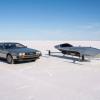 DeLorean climbs skyward to race electric flying cars
 Atari's 800XL returns with a keyboard, cartridges and BASIC
 Bioinspired robot airdrops into remote waters via morphing wing-sail
 Anduril interceptor adapts to emerging threats via swappable stages
 I Built a Website to Expose Solar and Battery Scams


The world's first diesel plug-in hybrid pickup truck is here
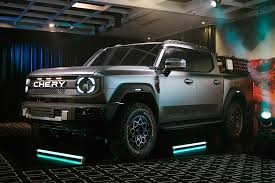
It arrives at a time when global demand for pickups continues to surge, even as emissions regulations tighten. That's exactly why this makes sense: a diesel PHEV represents a compelling alternative to pure electric pickups, especially in markets where charging infrastructure still lags.
Now, Chery is a relatively well-known Chinese carmaker with a strong focus on the pickup market. Its midsize electric pickup, the Rely R08, debuted in China last year at just CN¥88,800 yuan – that's under US$13,000. That pricing alone made it a popular choice in markets like the Middle East and Latin America.
Chery recently revealed its intention to spin Rely off as a standalone brand offering a variety of pickup variants. The range already includes the Rely R08, Rely R08 Pro and Rely R08 EV. Now it appears we're looking at the next model in that lineup.
The KP31 debuted as the Rely P3X concept last year and is largely targeted at Australia's highly competitive pickup market. It features classic pickup styling: a boxy design, large bumpers and generous plastic cladding around the body.
In its earlier concept form, Chery showed the battery pack mounted toward the rear of the frame alongside a conventional 4WD system. The design carries clear Jeep Gladiator and Toyota Land Cruiser vibes. It features bold badging front and rear, a functional snorkel, a tub rack with recovery tracks, and rides on 285/70 R17 all-terrain tires.
Under the hood sits a 2.5-liter diesel engine. While performance figures haven't yet been disclosed, Chery claims a remarkable 47% thermal efficiency. The company also says the KP31 will deliver 10% better fuel efficiency than a typical diesel powertrain.
Details about the electric motor remain limited. What we do know is that the diesel PHEV is expected to offer a 2,205-lb (1-tonne) payload and a 7,716-lb (3.5-tonne) towing capacity, putting it squarely in Toyota HiLux and Ford Ranger territory.
Inside, the concept features a large central touchscreen and a fully digital driver display, along with suede and leather surfaces. The company has hinted that the final interior design is still subject to change, but the cabin appears spacious enough for a full family. That's notable, given that many midsize pickups compromise rear-seat space to accommodate the bed.
The concept measures 220.9 inches (5,610 mm) in length, 75.6 inches (1,920 mm) in width and 75.8 inches (1,925 mm) in height. According to Chery, the production version will be shorter, at 214.6 inches (5,450 mm) in length.
As of now, the KP31 is scheduled to go on sale in Australia in Q4 2026. There's also talk of additional markets, with Chery Australia Chief Engineer Peter Matkin noting that "these rugged-looking cars get a lot of attention overseas," referring to regions such as Europe, South Africa and South America.
According to local Chery executives, the vehicle will primarily target two buyer groups: families and business owners seeking dual-purpose vehicles, as well as off-road and leisure enthusiasts.