










Breaking News
 After Trump's War, the US Military Won't Be Invited Back
 US Will Take and Keep Kharg Island Before War is Over
 Counterterrorism/Military Expert Warns That President Trump Is Walking Into A Deep State Trap...
 The US Military Is Involved In A Massive Mobilization Of Infantry Troops To Launch A FULL SCALE...
Top Tech News
 The Pentagon is looking for the SpaceX of the ocean.
 Major milestone by 3D printing an artificial cornea using a specialized "bioink"...
 Scientists at Rice University have developed an exciting new two-dimensional carbon material...
 Footage recorded by hashtag#Meta's AI smart glasses is sent to offshore contractors...
 ELON MUSK: "With something like Neuralink… we effectively become maybe one with the AI."
 DARPA Launches New Program Generative Optogenetics, GO,...
 Anthropic Outpaces OpenAI Revenue 10X, Pentagon vs. Dario, Agents Rent Humans | #234
 Ordering a Tiny House from China, what's the real COST?
 New video may offer glimpse of secret F-47 fighter
 Donut Lab's Solid-State Battery Charges Fast. But Experts Still Have Questions



Scientists reveal controversial plan to launch 50,000 MIRRORS into space for 'sunlight on demand
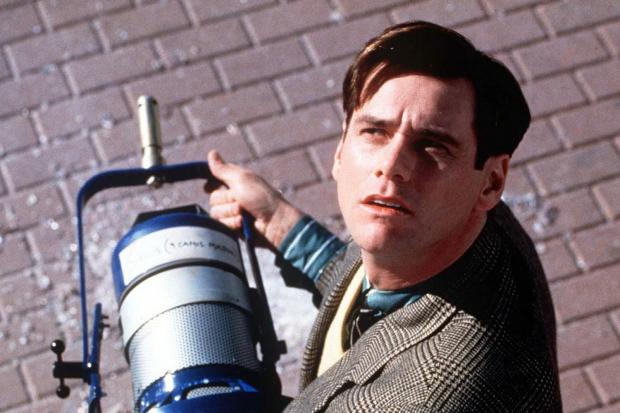
Scientists have revealed a controversial plan to launch 50,000 mirrors into space to offer 'sunlight on demand'.
California–based startup, Reflect Orbital, is poised to secure permission to launch a 60–foot (18.3–metre) prototype mirror into orbit to beam sunlight back to the Earth's surface.
Once it has reached an altitude of 400 miles (640 km), the mirror will unfurl and illuminate a patch of Earth about three miles (4.8 km) wide.
Someone looking up from the ground would see a small dot of light about as bright as the moon.
Reflect Orbital says its space mirrors could allow solar power plants to operate 24 hours a day, provide lighting for disaster–struck regions, and even replace street lights.
The company has already applied to the US Federal Communications Commission (FCC), which issues licences for satellites, and the enormous mirror could launch as soon as this summer.
However, not everyone is on board with the plan.
Martha Hotz Vitaterna, a neurobiologist at Northwestern University and co–director of the Center for Sleep and Circadian Biology, warned: 'The implications for wildlife, for all life, are enormous.'
Reflect Orbital, which has already raised more than $28 million (£20.8 million) from investors, is not the first group to dream about harnessing the sun with mirrors.
In 1993, a Russian satellite dubbed Znamya, or Banner, unfurled a 65–foot mirror and reflected a beam of light as strong as two or three full moons.
The idea was to see whether a small fleet of satellites could be used to extend daylight hours in the remote region of Arctic Siberia.
However, Reflect Orbital's plan is even more ambitious than those early experiments.
The company says it plans to harness the vast quantities of sunlight that normally pass Earth by, and sell it on demand to people, companies and governments.
The biggest appeal will be for the growing solar power industry, which is currently facing the unavoidable problem that solar panels can't generate electricity at night.
Ben Nowack, Reflect Orbital's chief executive, told the New York Times: 'We're trying to build something that could replace fossil fuels and really power everything.'
By the end of 2027, Reflect Orbital plans to launch two more prototype mirrors with hopes to launch 1,000 larger satellites by the end of the following year.