










Breaking News
 War Abroad and Authoritarianism at Home
 MASS CASUALTY EVENT: Air Canada Plane Collides with Firetruck at LaGuardia Airport
 Iran warns of 'zero restraint' if infrastructure attacked again
 Does the TESLA FSD CHIP Match the Human Brain ?
Top Tech News
 We Build and Test Microwave Blocking Panels - Invisible to Radar
 Man Successfully Designs mRNA Vaccine To Treat His Dog's Cancer
 Watch: Humanoid robot gets surprisingly good at tennis
 Low-cost hypersonic rocket engine takes flight for US Air Force
 Your WiFi Can See You. Here's How.
 Decentralizing Defense: A $96 Guided Rocket Just Put Precision Warfare into the Hands of the People
 Israel's Iron Beam and the laser future of missile defense
 Scientists at the Harbin University of Science and Technology have pioneered a sophisticated...
 Researchers have developed a breakthrough "molecular jackhammer" technique...
 Human trials are underway for a drug that regrows human teeth in just 4 days.



'Punish Iran': Saudi Arabia & UAE Inch Closer To Joining US-Israeli War
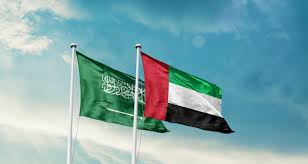
Saudi Arabia agreed to open King Fahd Air Base in Taif, in Western Saudi Arabia, to the Americans, multiple US and western officials familiar with the matter told Middle East Eye.
The base is important because it is farther from Iranian Shahed drones than Prince Sultan Air Base, which has come under repeated Iranian attacks. Taif is also close to Jeddah, the Red Sea port that has become a critical logistics hub since Iran effectively took control of the Strait of Hormuz. Current and former US officials tell MEE that if the Trump administration is preparing for a longer war on Iran, Jeddah may be critical for sustaining US armed forces. Thousands of US ground troops are en route to the region from East Asia.
Saudi Arabia's decision to expand base access, current and former officials say, underscores a shift in how the kingdom and some other Gulf states are responding to the US-Israeli war on Iran. "The attitude in Riyadh has shifted towards supporting the US war as a way to punish Iran for strikes," a western official in the Gulf told MEE.
Trump and the Saudi crown prince have been holding regular phone calls for the last three weeks, the US and western officials told MEE. The UAE has also told the US that it is geared up for a long war, putting no pressure on Washington to wrap up the conflict soon.
In a phone call earlier this month, UAE Foreign Minister Sheikh Abdullah bin Zayed told his counterpart, US Secretary of State Marco Rubio, that the UAE is prepared for the war to last up to nine months, the US official told MEE.
Differing Gulf perspectives
Saudi Arabia, the UAE and Qatar lobbied US President Donald Trump against attacking Iran. While they host US military bases, the states insisted that they not be used as launchpads when the US joined Israel on 28 February to attack Iran. Despite this, the Gulf states have paid the heaviest price for the US's decision to go to war.
The UAE alone has intercepted 338 ballistic missiles and 1,740 drones since the start of the war. Qatar suffered the worst attack of any Gulf state despite being a critical mediator that has consistently focused on de-escalation.
Iran responded to an Israeli attack on its South Pars gas field this week by launching missiles at Qatar's Ras Laffan refinery. The damage will take three to five years to repair and affects 17 percent of Qatar's gas production, according to Qatari energy minister Saad al-Kaabi.