










Breaking News
 SpaceX Starlink Satellite and Launch Plans from Shotwell
 Iran Defiantly Tells Trump "NO DEAL" 1 Day Ahead Of Trump's Deadline!
 Breaking! After Google and META Settle For Intentionally Brainwashing Americas Youth...
 Senate Agrees to Fund Most of DHS, Sending Bill to House Without ICE Funding
Top Tech News
 We Build and Test Microwave Blocking Panels - Invisible to Radar
 Man Successfully Designs mRNA Vaccine To Treat His Dog's Cancer
 Watch: Humanoid robot gets surprisingly good at tennis
 Low-cost hypersonic rocket engine takes flight for US Air Force
 Your WiFi Can See You. Here's How.
 Decentralizing Defense: A $96 Guided Rocket Just Put Precision Warfare into the Hands of the People
 Israel's Iron Beam and the laser future of missile defense
 Scientists at the Harbin University of Science and Technology have pioneered a sophisticated...
 Researchers have developed a breakthrough "molecular jackhammer" technique...
 Human trials are underway for a drug that regrows human teeth in just 4 days.



SpaceX Starlink Satellite and Launch Plans from Shotwell
Humans on lunar surface before 2030. HLS (Human Landing System) planned ready by 2028, though much must go right.
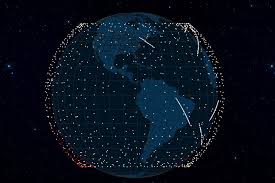
Starlink Constellation Size has ~10,000 Starlink satellites launched and [high speed internet] likely cap 15,000–20,000.
There has been a separate FCC filing for 15000 Direct to cellphone V3 Starlink and 1 million AI mini satellites.
AI satellites in multiple shells, possibly around Sun. Safety first. emphasizes communication of maneuvers for space traffic control. Compares 30,000 satellites to 30,000 cars on Earth—sparse if positions are shared.
Requested FCC licensing for up to 1 million AI satellites for distributed space-based data center network (surprised it got little news).
Over 600 Falcon 9 successful launches (608 noted). 165 launches last year. There will only be ~140–145 falcon 9 launches expected this year, then tapering as Starship ramps up. Over 85% of US launches in 2025 were Falcon 9.
SpaceX Starship will carry heavy payloads like AI satellites and eventually humans (up to 300 passengers depending on destination). Internal demand from Starlink/AI satellites drives production consistency, safety, and human transport capability.