










Breaking News
 Iran Charging $2 Million for Hormuz Passage Per Ship
 The Olympics just updated their policy, and it's a MASSIVE win for women's sports!
 New World Busy Being Born While Old One Is Busy Dying
 Actionable Ways to Profit, Protect Your Wealth, and Expand Your Freedom in an Unstable World
Top Tech News
 We Build and Test Microwave Blocking Panels - Invisible to Radar
 Man Successfully Designs mRNA Vaccine To Treat His Dog's Cancer
 Watch: Humanoid robot gets surprisingly good at tennis
 Low-cost hypersonic rocket engine takes flight for US Air Force
 Your WiFi Can See You. Here's How.
 Decentralizing Defense: A $96 Guided Rocket Just Put Precision Warfare into the Hands of the People
 Israel's Iron Beam and the laser future of missile defense
 Scientists at the Harbin University of Science and Technology have pioneered a sophisticated...
 Researchers have developed a breakthrough "molecular jackhammer" technique...
 Human trials are underway for a drug that regrows human teeth in just 4 days.



Iran Charging $2 Million for Hormuz Passage Per Ship
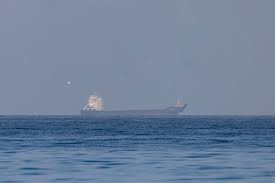
Officials estimate that a formalized toll system could generate up to $80 billion annually, transforming the strait into a powerful revenue stream at a time when sanctions have constrained the country's economy.
The development signals an escalation in Tehran's efforts to assert control over one of the world's most critical maritime corridors, through which roughly a fifth of global oil supplies once flowed, according to a recent Financial Times report.
President Donald Trump has suggested Iran had offered concessions — including what he described as a "gift" of safe passage for a limited number of ships.
But shipping executives and analysts say access to the strait has become tightly controlled, costly, and highly politicized.
Before the outbreak of hostilities involving Iran, the U.S., and Israel, approximately 135 vessels transited the narrow waterway each day.
That figure has since collapsed.
Data cited in the report shows just 116 crossings between March 1 and March 25 — a staggering 97% drop compared with the previous month.
Thousands of vessels are now effectively stranded in the Gulf, unable or unwilling to risk passage without Iranian approval.
At the heart of the new Iran toll system is a requirement that ships be deemed "non-hostile" and coordinate directly with Iranian authorities.
This process reportedly involves government-to-government communication, vetting of cargo and crew, and issuing a special clearance code that vessels must broadcast as they approach the strait.
Only after these steps — and, in some cases, payment of multimillion-dollar fees — are ships permitted to pass.
Iranian officials have framed the policy as both a wartime necessity and a long-term strategic shift.
Foreign Minister Abbas Araghchi has indicated that Tehran intends to maintain a new "order" in the strait even after the conflict ends, asserting Iran's sovereignty over the passage despite its status as an international route.
Lawmakers in Tehran have gone further, openly describing the emergence of a "new regime" governing maritime transit.
The comparison to historic toll systems — and to modern examples like the Suez Canal — has been explicitly invoked by Iranian policymakers.
Yet the legal and geopolitical implications are profound.
Under widely accepted interpretations of maritime law, including principles outlined in the U.N. Convention on the Law of the Sea, coastal states may regulate traffic for security reasons but are not permitted to arbitrarily restrict or monetize "innocent passage."