










Breaking News
 Yemen's Houthis escalate attacks on Israel as they are drawn into Iran war - with vital trade...
 Diabetes patients are CURED of disease with groundbreaking new treatment, study shows
 We're f*cked...
 The Real Victim in This War Is Not Israel
Top Tech News
 We Build and Test Microwave Blocking Panels - Invisible to Radar
 Man Successfully Designs mRNA Vaccine To Treat His Dog's Cancer
 Watch: Humanoid robot gets surprisingly good at tennis
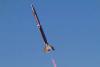 Low-cost hypersonic rocket engine takes flight for US Air Force
 Your WiFi Can See You. Here's How.
 Decentralizing Defense: A $96 Guided Rocket Just Put Precision Warfare into the Hands of the People
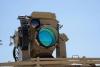 Israel's Iron Beam and the laser future of missile defense
 Scientists at the Harbin University of Science and Technology have pioneered a sophisticated...
 Researchers have developed a breakthrough "molecular jackhammer" technique...
 Human trials are underway for a drug that regrows human teeth in just 4 days.



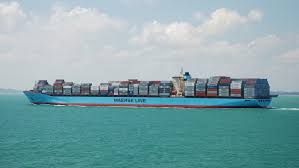
Maersk Slaps Emergency Fuel Surcharge As War Upends Marine Supply Chains
The price of fuel oil has surged this month as the stalled tanker traffic at the Strait of Hormuz is tightening supplies of the fuel in Asia, the key bunkering hub for fuel oil used in ships.
The Middle East is a major global supplier of fuel oil, especially of high-sulfur fuel oil (HSFO). But the Iran war has all but halted traffic via the Strait of Hormuz, stranding supplies for Asia and its key bunkering hub of Singapore.
Yet, stocks in Singapore have increased this month as shipping owners and operators have refrained from buying the too expensive fuel. These, however, could soon start to deplete, fast, because vessels are becoming desperate to refuel, according to a Financial Times analysis.
One trader told the publication that their firm had to forgo cargo in order to deliver additional fuel volumes between major ports, mostly between the United States and Singapore.
With the Middle East's key bunkering port of Fujairah mostly offline by the end of March due to Iranian attacks earlier this month, the marine fuel market is in chaos.
Shipping giant Maersk warned in its latest Middle East advisory this week that "To preserve network stability, we have undertaken significant redistribution of fuels to offset shortages in the Middle East, and are securing alternative sources from different locations, suppliers, and at increased premiums."
Maersk also introduced as of March 25 an Emergency Bunker Surcharge (EBS), "in response to notable fluctuations in fuel supply and the additional costs of distribution."
Maersk's chief commercial officer Karsten Kildahl said earlier this month that "There is currently sufficient fuel globally, but it is unevenly distributed. As a result, we are making changes to our fuel supply chain and begin moving fuel to ensure our vessels can continue to bunker where needed – and protect the flow of trade."