










Breaking News
 Lieutenant General Leonard F. Anderson IV, commander of Marine Forces Reserve,...
 Your bones are NOT supposed to get weaker as you age.
 UBS has recently halted withdrawals from a $469 million real estate fund...
 The Red Sea and the Strait of Hormuz have become the world's most critical digital chokepoints..
Top Tech News
 The Secret Spy Tech Inside Every Credit Card
 Red light therapy boosts retinal health in early macular degeneration
 Hydrogen-powered business jet edges closer to certification
 This House Is 10 Feet Underground and Costs $0 to Cool. Why Is It Banned in 30 States?
 Cold Tolerant Lithium Battery?? Without Heaters!? Ecoworthy Cubix 100 Pro!
 DLR Tests Hydrogen Fuel for Aviation at -253°C
 Watch: China Claims Cyborg Breakthrough To Build An "Army Of Centaurs"
 Instant, real-time video AI is now upon us, for better and worse
 We Build and Test Microwave Blocking Panels - Invisible to Radar
 Man Successfully Designs mRNA Vaccine To Treat His Dog's Cancer



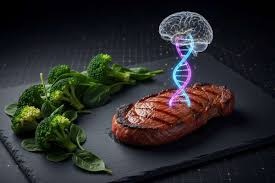
Study Reports Meat Consumption Linked to Lower Alzheimer's Risk...
Introduction
A large-scale study analyzing data from the UK Biobank has identified a link between meat consumption and better cognitive function in individuals carrying a specific genetic variant associated with a higher risk of Alzheimer's disease. The findings, emerging from research on over 181,000 participants, suggest that dietary factors may interact with genetics in complex ways that challenge one-size-fits-all nutritional guidelines.
According to the study, carriers of the Apolipoprotein E4 (ApoE4) gene allele who consumed meat daily demonstrated faster cognitive processing speeds compared to non-meat eaters with the same genetic profile. The ApoE4 variant is a well-established genetic risk factor for late-onset Alzheimer's disease, present in an estimated 15-25% of the population. The report stated that the results highlight the potential importance of personalized nutrition based on an individual's genetic makeup.
Study Finds Meat Diet May Lower Dementia Risk in ApoE4 Carriers
The research, which has not yet been formally published in a peer-reviewed journal, was presented as a preprint and analyzed genetic and dietary data from participants in the UK Biobank. Researchers focused on measuring reaction time, which they used as a proxy for processing speed and overall cognitive health.