










Breaking News
 Alex Jones Live: As California Burns, Newsom Stands Down Again!
 Susie Wiles Reportedly Orchestrated Zacharia's Firing With Hannity Hit
 The Biggest Winners And Losers From The Petrodollar's Decline
 US Quietly Shifts MQ-9 Reapers Into South America
Top Tech News
 I Built a Website to Expose Solar and Battery Scams
 Whistleblower Issues Dire Warning: Rogue AI, Hacking Nuclear Programs...
 Multi-material insulation delivers up to 10,000 x the stiffness
 Anduril's plan to save US sub edge from China's undersea surge
 Researchers Develop AI 'Mind-Reading' Tool That Reconstructs What Your Eyes See
 Video: Dexterous robot hand learns the delicate art of silk embroidery
 The computer that can read your mind:
 Seven apps. One craft
 SHOCK CASE REPORT: Advanced Alzheimer's Patient Regains Speech, Memory, Mobility...
 Most artificial limbs rely on silicone or plastic to mimic human hands.



DLR Tests Hydrogen Fuel for Aviation at -253°C
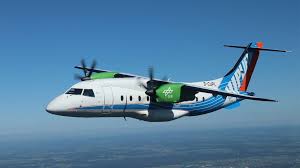
At its Future Propulsion Test Facility in Cologne, engineers conducted cryogenic tests in early 2026 to study how liquid hydrogen could be used as a fuel for aircraft.
These experiments pushed systems to around −253°C (−423°F), the temperature at which hydrogen becomes liquid and can be stored efficiently for aviation use.
The focus of these tests is one of the biggest challenges in hydrogen aviation: safely transporting super-cold liquid hydrogen from onboard tanks through fuel lines and into engines without leaks, material stress, or energy loss. Interestingly, some of the engineering concepts draw from **cryogenic fuel handling techniques already used in shipping and space industries**, showing how cross-industry innovation is helping accelerate progress.
Hydrogen offers significant potential as a zero-carbon aviation fuel at the point of use, but significant hurdles remain, including storage, infrastructure, and aircraft redesign.
Projects like this are part of a broader push across Europe to make hydrogen-powered flight viable in the coming decades.