










Breaking News
 Connecting dots that don't connect
 Grand Theft World Podcast 280 | Liquid Interest with Guests Nick Bryant & David Gosselin
 Episode 496 – The Most Important Bet You've Never Heard Of
 Hormuz choke: Iran doesn't need to win the war, it just needs to make it too expensive to finish
Top Tech News
 The Secret Spy Tech Inside Every Credit Card
 Red light therapy boosts retinal health in early macular degeneration
 Hydrogen-powered business jet edges closer to certification
 This House Is 10 Feet Underground and Costs $0 to Cool. Why Is It Banned in 30 States?
 Cold Tolerant Lithium Battery?? Without Heaters!? Ecoworthy Cubix 100 Pro!
 DLR Tests Hydrogen Fuel for Aviation at -253°C
 Watch: China Claims Cyborg Breakthrough To Build An "Army Of Centaurs"
 Instant, real-time video AI is now upon us, for better and worse
 We Build and Test Microwave Blocking Panels - Invisible to Radar
 Man Successfully Designs mRNA Vaccine To Treat His Dog's Cancer



Gulf LNG Crisis Set To 'Make Coal Great Again'
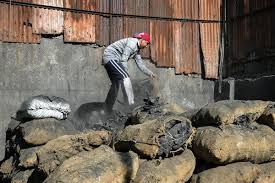
This is now the second major energy crunch of the decade: first Russia's invasion of Ukraine, now the U.S.-Iran conflict. However, this one looks a lot more catastrophic.
The immediate impact of this energy crunch will be a resurgence of coal, especially across Asia, as power grid operators will be forced to switch to the dirtiest fuel to keep electricity affordable during the crisis.
"We are now seeing a second, very large energy supply shock," Goldman commodities expert Samantha Dart told Bloomberg.
Dart added, "If you're sitting in Asia, going through this again, it's possible you change your strategy long term, rely more on coal for longer, build out your renewables faster, and reduce your exposure to natural gas."
Last week, JPMorgan's commodity expert showed just how Asia has emerged as ground zero of the global energy crisis. The shock is expected to spread worldwide, hitting Asia first, then Africa and Europe, before eventually reaching the U.S., though the most acute impact there may be concentrated in California.
Bloomberg noted that Japan is already turning back to coal-fired power generation. India and Bangladesh are also running coal plants at higher capacity, while some European countries may soon be forced to burn more coal as disruptions at the Strait of Hormuz and damage to Qatar's LNG export hub tighten global gas supplies and send prices sharply higher.
Fatih Birol, director of the International Energy Agency, who has warned about the worst energy shock on record, told the outlet that "high energy prices will lead governments, industries, and households to look at other options." Those options include "at least temporarily, upward pressure on the use of coal both for electricity generation and for the industrial sector," he said.
We cited Dart's note earlier this month that showed natural gas prices across Europe and Asia have jumped so much during the US-Iran conflict that gas and oil to coal switching has already been viewed favorably by power grid operators.
Dart showed the price zones for Europe's benchmark NatGas, TTF, where fuel switching occurs:
The pink band is the lignite-switching range.
The gray band is the hard-coal-switching range.
The green band is the industrial oil-switching range.