










Breaking News
 Muslims Hate Dogs - so the BBC now pushing anti dog propaganda. Defund the BBC.
 Trump Threatens To 'Blow Up' Iran's Desalination Plants
 US Launches 48th Airstrike in Somalia of the Year
 After failing to pass SAVE Act, Lindsey hightails it to Disney to hang out with Minnie…
Top Tech News
 The Secret Spy Tech Inside Every Credit Card
 Red light therapy boosts retinal health in early macular degeneration
 Hydrogen-powered business jet edges closer to certification
 This House Is 10 Feet Underground and Costs $0 to Cool. Why Is It Banned in 30 States?
 Cold Tolerant Lithium Battery?? Without Heaters!? Ecoworthy Cubix 100 Pro!
 DLR Tests Hydrogen Fuel for Aviation at -253°C
 Watch: China Claims Cyborg Breakthrough To Build An "Army Of Centaurs"
 Instant, real-time video AI is now upon us, for better and worse
 We Build and Test Microwave Blocking Panels - Invisible to Radar
 Man Successfully Designs mRNA Vaccine To Treat His Dog's Cancer



The buried 'second Sphinx' tearing researchers apart... as scientists turn on each other...
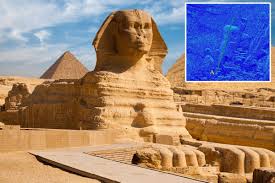
A split between two researchers behind last year's Giza discovery has erupted into a public row over claims of a hidden second Sphinx.
Radar engineer Filippo Biondi stunned the world last week when he announced on the Matt Beall Limitless podcast that satellite radar scans had revealed what he believes is a mirror image of the Great Sphinx buried beneath Egypt's Giza Plateau.
But now his former colleague, Egyptologist Armando Mei, who previously worked alongside Biondi on research into underground structures at Giza, has rejected the claim, exposing a deep divide between the once-aligned researchers.
'From both a personal and scientific standpoint, I do not believe that a second Sphinx exists on the Giza Plateau,' Mei told the Daily Mail.
He said this conclusion was based on multiple lines of analysis, including archaeological, geometric, geological and tomographic evidence, which he argued do not support the existence of a second monument.
The dispute marked a dramatic turn between the two men, who were previously part of the Khafre Research Project that announced in March 2025 the discovery of massive shafts and chambers beneath the pyramids and the Great Sphinx.
Biondi, however, has insisted that his analysis of ancient imagery and geometric symmetry points to what he believes is a hidden twin monument beneath the plateau.
'We have recently gathered some extremely satisfying experimental results that offer a different perspective,' he told the Daily Mail, adding that final results will be presented at a conference in Bologna on June 21.
Biondi has also pushed back against online critics who have challenged his findings, saying recent comparisons made using Google Earth imagery lacked the scientific rigor required for professional aerial analysis.
Despite the ongoing debate, Biondi expressed respect for leading Egyptologist Dr Zahi Hawass, who has previously dismissed the claims.
'I want to express my deepest and most sincere respect for him and his immensely important academic standing,' Biondi said.
Mei, however, has described the second Sphinx claim as unsupported and inaccurate.
'Speculative announcements are altering the nature of the research and are placing what remains of the team in a position of opposition, rather than convergence, with the Egyptian authorities,' he said.