










Breaking News
 Muslims Hate Dogs - so the BBC now pushing anti dog propaganda. Defund the BBC.
 Trump Threatens To 'Blow Up' Iran's Desalination Plants
 US Launches 48th Airstrike in Somalia of the Year
 After failing to pass SAVE Act, Lindsey hightails it to Disney to hang out with Minnie…
Top Tech News
 The Secret Spy Tech Inside Every Credit Card
 Red light therapy boosts retinal health in early macular degeneration
 Hydrogen-powered business jet edges closer to certification
 This House Is 10 Feet Underground and Costs $0 to Cool. Why Is It Banned in 30 States?
 Cold Tolerant Lithium Battery?? Without Heaters!? Ecoworthy Cubix 100 Pro!
 DLR Tests Hydrogen Fuel for Aviation at -253°C
 Watch: China Claims Cyborg Breakthrough To Build An "Army Of Centaurs"
 Instant, real-time video AI is now upon us, for better and worse
 We Build and Test Microwave Blocking Panels - Invisible to Radar
 Man Successfully Designs mRNA Vaccine To Treat His Dog's Cancer



Celebrating Adam Smith's Wealth of Nations at 250 Years
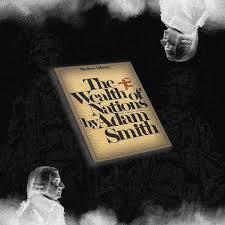
These were the publication of Adam Smith's Inquiry into the Nature and Causes of the Wealth of Nations on March 9, 1776, and a few months later, on July 4, 1776, the signing and public proclamation of the American Declaration of Independence.
Both marked a distinct call for human liberty. In the Wealth of Nations, Smith offered a critique of government regulation and control of economic affairs, both within and between nations, and a reasoned case for a "system of natural liberty," under which every individual has the freedom to pursue his own affairs in his own way in the use of his own labor and resources in peaceful association and competition with others on the basis of mutual agreement and voluntary consent and exchange.
Government's responsibility in such a system of natural liberty, Smith said, was to be limited to law enforcement by a judiciary to adjudicate disputes and a police power against domestic and foreign threats to the life and property of the citizenry. At the most, Smith saw a useful but limited additional function for government in supplying a variety of infrastructure and other "public works" serving the general interest of the population. But beyond these, Adam Smith believed that human affairs were best left to the free choices and voluntary interactions of the people themselves.
The American Declaration of Independence offered its own complementary conception of a system of natural liberty when it hailed that all men are created equal and endowed by their Creator with certain unalienable rights, among which were the rights to life, liberty, and the pursuit of happiness. Governments, the authors of the document said, were formed by men to secure those rights and liberties and may be abolished and replaced with new governments when they fail to protect freedom or abuse their power in the service of individual freedom.
Most of the American Declaration, after this statement of principles, offers an enumeration of the British government's violation of the personal and economic liberty of the residents of the 13 North American colonies. Restrictions were imposed on the importing or exporting of various goods; taxes had been established without the consent of the governed; free migration of people to settle in the colonies had been restricted; a large number of government regulators and officials had been put in place to supervise and control the people's activities in almost all aspects of life; and many basic civil liberties had been abridged or abolished by the king's government.