










Breaking News
 The Epstein files that were missing !!!!
 Police Can Now See Your Bank Accounts & Location History Anytime...
 Google's New Quantum Research Reignites Push To Harden Bitcoin
 Jamie Dimon, CEO of JPMorgan Chase, has started cutting the bank's $27 billion exposure...
Top Tech News
 The Secret Spy Tech Inside Every Credit Card
 Red light therapy boosts retinal health in early macular degeneration
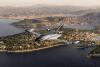 Hydrogen-powered business jet edges closer to certification
 This House Is 10 Feet Underground and Costs $0 to Cool. Why Is It Banned in 30 States?
 Cold Tolerant Lithium Battery?? Without Heaters!? Ecoworthy Cubix 100 Pro!
 DLR Tests Hydrogen Fuel for Aviation at -253°C
 Watch: China Claims Cyborg Breakthrough To Build An "Army Of Centaurs"
 Instant, real-time video AI is now upon us, for better and worse
 We Build and Test Microwave Blocking Panels - Invisible to Radar
 Man Successfully Designs mRNA Vaccine To Treat His Dog's Cancer



Super Micro bust signals tighter US curbs on Nvidia's AI chips
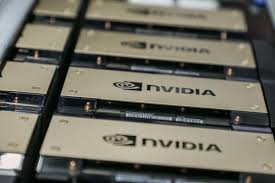
The United States Department of Justice's recent moves to prosecute executives of a server supplier and individual agents and to accuse them of smuggling Nvidia's high-end chips to China via Thailand may signal a trend toward tighter export control enforcement, according to industry observers.
On March 19, US authorities charged Yih-Shyan "Wally" Liaw, a co-founder of Super Micro Computer, along with Ruei-Tsang "Steven" Chang and Ting-Wei "Willy" Sun, with conspiring to divert US-made artificial intelligence servers with restricted graphics processing units (GPUs), including A100, to China. Liaw and Sun were arrested in California, while Chang remains at large.
Separately, US prosecutors charged Stanley Yi Zheng, a Chinese national who was arrested on March 22, and Matthew Kelly and Tommy Shad English, both Americans who surrendered on March 25, in connection with an alleged conspiracy to smuggle advanced AI chips out of the United States, including restricted Nvidia A100 processors.
Prosecutors did not say whether the two cases were linked, but both involved a transshipment route from the United States to Taiwan, then Thailand and onward to Hong Kong and mainland China.
The disclosures were followed by a Reuters report on March 27 that said four Chinese universities, including two with ties to the People's Liberation Army, had purchased Super Micro Computer servers equipped with restricted AI chips over the past year, according to procurement records, although it remained unclear how the systems were sourced.
Following Liaw's arrest, US Senators Jim Banks and Elizabeth Warren urged Commerce Secretary Howard Lutnick to immediately suspend Nvidia's export licenses for advanced AI chips to China and Southeast Asian intermediaries, citing what they described as a serious national security risk stemming from the large-scale diversion of US technology.
They called on the Department of Commerce to take the following actions without delay:
Pause and comprehensively review all active export licenses for Nvidia's advanced AI chips and server systems to China and Southeast Asian intermediaries, including Malaysia, Thailand, Vietnam and Singapore, pending in-person end-user verification and stronger compliance controls.
Require future license applications to include binding, independently auditable end-user commitments, with automatic revocation for any verified breaches.
Examine whether Nvidia's prior representations about the absence of chip diversion were misleading and whether they affected licensing decisions, thus warranting further investigation.