










Breaking News
 The Epstein files that were missing !!!!
 Police Can Now See Your Bank Accounts & Location History Anytime...
 Google's New Quantum Research Reignites Push To Harden Bitcoin
 Jamie Dimon, CEO of JPMorgan Chase, has started cutting the bank's $27 billion exposure...
Top Tech News
 The Secret Spy Tech Inside Every Credit Card
 Red light therapy boosts retinal health in early macular degeneration
 Hydrogen-powered business jet edges closer to certification
 This House Is 10 Feet Underground and Costs $0 to Cool. Why Is It Banned in 30 States?
 Cold Tolerant Lithium Battery?? Without Heaters!? Ecoworthy Cubix 100 Pro!
 DLR Tests Hydrogen Fuel for Aviation at -253°C
 Watch: China Claims Cyborg Breakthrough To Build An "Army Of Centaurs"
 Instant, real-time video AI is now upon us, for better and worse
 We Build and Test Microwave Blocking Panels - Invisible to Radar
 Man Successfully Designs mRNA Vaccine To Treat His Dog's Cancer



Gate of Tears could soon be Iran war's next stranglehold
If you'd never heard of the Strait of Hormuz before, you probably have by now. Iran's effective closure of the waterway, which usually carries about 20% of the world's oil and gas, has put severe pressure on the global economy.
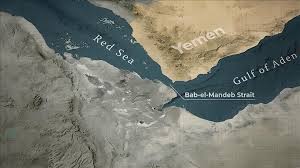
Now, some analysts are warning a new flashpoint could emerge: the Bab el-Mandeb Strait.
That's because on March 28, the Houthis, a military group that controls large parts of northern Yemen and is aligned with Iran, entered the war, launching missiles towards Israel for the first time since the war with Iran began.
Yemen is situated on one side of the strait, and the Houthis have previously attacked shipping in the Red Sea, causing major disruption in late 2023 and 2024.
Bloomberg now reports Iran has approached the Houthis to prepare for a similar campaign. Here's why all eyes will be back on the Houthis, Bab el-Mandeb and the Red Sea, and what disruption of a second major chokepoint could mean for the world economy.
What is the Bab el-Mandeb Strait?
The Bab el-Mandeb Strait is about 30 kilometres wide at its narrowest point. It is situated between Yemen on the Arabian Peninsula to the northeast and Eritrea and Djibouti in Africa on the west.
Its name literally means "Gate of Tears" in Arabic, after its famously treacherous sailing conditions.
It has become so important because, along with the Suez Canal in Egypt, it allows ships to transit directly between the Mediterranean Sea and the Indian Ocean by passing through the Red Sea and the Gulf of Aden.
Before the Suez Canal's opening in the 19th century, ships had to travel all the way around the southern tip of Africa to join these two points.