










Breaking News
 U.S. intercepted Ukraine government messages discussing plot to route money to Biden re-election
 This Should NOT Be Happening in Oil Markets
 Unjust War Theory
 Once Again, a Crisis Raises the Question, Why Does the State Exist?
Top Tech News
 The Secret Spy Tech Inside Every Credit Card
 Red light therapy boosts retinal health in early macular degeneration
 Hydrogen-powered business jet edges closer to certification
 This House Is 10 Feet Underground and Costs $0 to Cool. Why Is It Banned in 30 States?
 Cold Tolerant Lithium Battery?? Without Heaters!? Ecoworthy Cubix 100 Pro!
 DLR Tests Hydrogen Fuel for Aviation at -253°C
 Watch: China Claims Cyborg Breakthrough To Build An "Army Of Centaurs"
 Instant, real-time video AI is now upon us, for better and worse
 We Build and Test Microwave Blocking Panels - Invisible to Radar
 Man Successfully Designs mRNA Vaccine To Treat His Dog's Cancer



Trump To Declare Iran War Wind-Down As Iranian President Issues Open Letter To Americans
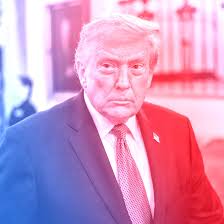
Trump will use his primetime 9pm ET Oval Office address Wednesday night to declare - against a backdrop of deteriorating poll numbers -that the month-long war in Iran is winding down, and that others need to resolve the Strait of Hormuz blockade, Politico reported. The president telegraphed that message in interviews, social media posts and public comments over the past 24 hours, laying the groundwork for a speech that is expected to claim that all military objectives have been met, according to six people familiar with the planning and granted anonymity to speak candidly. He also intends to slam NATO allies for the biggest unresolved matter of the war, Iran's ongoing restrictions of shipping traffic through the Strait of Hormuz.
Steve Bannon, Trump's former White House chief strategist, said the president will essentially declare victory, laying out what he's achieved in Iran and what he will do before the U.S. leaves along with "dumping on the NATO allies – it's their issue. Two, three weeks, definable objectives. 'I came, I saw, I conquered' — and we are hanging around a couple of weeks to conquer some more — maybe even then a ceasefire, while reiterating that the Hormuz situation is the Gulf Emirates' and the Europeans' to solve, and declare victory," he added.
With the conflict ongoing, the speech offers Trump an opportunity to lay out the war's objectives, what amounts to victory and how he intends to move forward if ceasefire talks sputter. The president's decision to deliver a major address about the war's endgame, coming as an additional 2,500 U.S. Marines make their way to the region, may be primarily an attempt to assuage voters' concerns and Wall Street's unease about energy markets and the knock-on effects of the strait closure.
"This is a big challenge for President Trump because it's not his natural environment. It cannot be confrontational. It needs to be reassuring," one of the people familiar said. "It needs to be very direct because he's not just communicating with the American people but the Iranians, our allies in the region and our allies in Europe."
The president's first primetime address since the war began comes about two weeks ahead of an oft-repeated four-to-six-week timeline for military operations in Iran.
Although Trump has made several public statements declaring that indirect talks with Iran are making progress, there is still little evidence that the two countries are anywhere close to an agreement - and some in the Iranian regime continue to insist that no talks are happening at all. In a social media post Wednesday morning, Trump asserted that Iran "has asked…for a CEASEFIRE!" But he added a key condition for accepting: "We will consider when Hormuz Strait is open, free, and clear."