










Breaking News
 U.S. intercepted Ukraine government messages discussing plot to route money to Biden re-election
 This Should NOT Be Happening in Oil Markets
 Unjust War Theory
 Once Again, a Crisis Raises the Question, Why Does the State Exist?
Top Tech News
 The Secret Spy Tech Inside Every Credit Card
 Red light therapy boosts retinal health in early macular degeneration
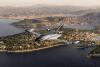 Hydrogen-powered business jet edges closer to certification
 This House Is 10 Feet Underground and Costs $0 to Cool. Why Is It Banned in 30 States?
 Cold Tolerant Lithium Battery?? Without Heaters!? Ecoworthy Cubix 100 Pro!
 DLR Tests Hydrogen Fuel for Aviation at -253°C
 Watch: China Claims Cyborg Breakthrough To Build An "Army Of Centaurs"
 Instant, real-time video AI is now upon us, for better and worse
 We Build and Test Microwave Blocking Panels - Invisible to Radar
 Man Successfully Designs mRNA Vaccine To Treat His Dog's Cancer



Aluminum Supply Shock: Top Gulf Producer Halts Operations After Iran Strike, Price To Spike
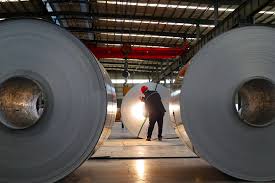
Neither company (at the time) confirmed whether supply will be impacted, but this morning the worst case appears to be confirmed with Reuters reporting that according to a Wednesday note by consultancy Wood Mackenzie "EGA's Al Taweelah facility in the United Arab Emirates halted operations after an Iranian missile and drone attack on Saturday damaged a power plant." A subsequent report from Bloomberg confirmed the report, writing that "Emirates Global Aluminium, the Middle East's top producer of the metal, halted operations at its Al Taweelah smelter after the site was struck by Iranian missiles and drones over the weekend, according to a person familiar with the matter."
At the same time, the smelter belonging to Aluminium Bahrain – Alba – which was also targeted on Saturday, "sustained significant damages and is expected to operate at an estimated utilisation of 30 percent", Wood Mackenzie said.
"The ongoing Middle East conflict is triggering a critical supply crisis in the global aluminium market, with disruptions potentially removing 3 to 3.5 million tonnes of output in 2026," Wood Mackenzie said. For context, the world produced just under 74 million tonnes of primary aluminum last year.
Wood Mackenzie's press office said its information was sourced from the consultancy's contacts in the Middle East, but declined to provide further details.
As a reminder, the aluminum smelter in Al Taweelah, in the emirate of Abu Dhabi, has a capacity of roughly 1.5 million metric tonnes per year, and an alumina refinery. Alba's capacity of 1.6 million tonnes per year in Bahrain makes it the world's biggest single-site aluminium smelter. The Middle East as a whole produces about 9% of global supply, with EGA and others playing a key role in supplying manufacturers across Europe, Asia and the US. Even before the industry was directly targeted, the effective closure of the Strait of Hormuz had already left the region's major producers short of critical inputs, with the sector anticipating a cascading wave of production cuts unless the strait reopens soon.
As Goldman commodity specialist James McGeoch writes, it's "hard to think of a bigger metal supply shock: High degree of expectation this was where it was heading, but the initial reaction was to fade the uncertainty yesterday, that should be replaced by fresh length if history is a guide."
This is how the Goldman trader does the math on lost output:
Lost ALBA 1mm + EGA 1.6mm + Qatalam 0.3mm + Mozal 0.6mm = 3.5m on a 74mt mkt = 4.7% impact to supply, and 7.7% of ex china supply
Balance this with Oil price demand destruction ~1mm, assume China overproduce and ship 500k - need to price demand destruction to balance ~2mt (inventory we see at ~1.5mt but majority of that is China link).
McGeoch says that in light of the shut downs, some traders have been eyeballing a significant surge in the aluminum price to $4500 (15% premium to LME for China is a clear starting point).