










Breaking News
 Jeffrey Epstein Survivor-Jena Lisa Jones
 'Smart' Devices Can Be Hacked
  Open The Strait - Trump sings Huge Ultimatum Reggae (AI Parody Song)
 How do you know if you're eating real meat
Top Tech News
 The Secret Spy Tech Inside Every Credit Card
 Red light therapy boosts retinal health in early macular degeneration
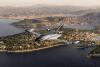 Hydrogen-powered business jet edges closer to certification
 This House Is 10 Feet Underground and Costs $0 to Cool. Why Is It Banned in 30 States?
 Cold Tolerant Lithium Battery?? Without Heaters!? Ecoworthy Cubix 100 Pro!
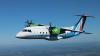 DLR Tests Hydrogen Fuel for Aviation at -253°C
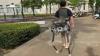 Watch: China Claims Cyborg Breakthrough To Build An "Army Of Centaurs"
 Instant, real-time video AI is now upon us, for better and worse
 We Build and Test Microwave Blocking Panels - Invisible to Radar
 Man Successfully Designs mRNA Vaccine To Treat His Dog's Cancer



Mass robotaxi malfunction sparks chaos in Chinese megacity as 100 driverless cabs abruptly stop...
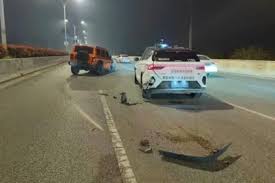
A mass robotaxi malfunction left passengers stranded in the middle of fast-moving traffic in a major Chinese city, causing major pile-ups.
The 'system failure' on Tuesday affected around 100 driverless vehicles, which are operated by Baidu's Apollo Go, in Wuhan, according to a preliminary report.
The cause of the incident is still under investigation.
A video verified by Reuters and posted on TikTok's Chinese version, Douyin, showed vehicles stalled on busy roads and obstructing traffic.
Local media reported that some passengers were trapped inside the vehicles for nearly two hours.
Speaking to Shanghai-based newspaper The Paper, a police officer said that while car doors could be opened, passengers were hesitant to get out because of heavy traffic and called the cops for assistance.
Baidu did not immediately respond to a request for comment.
One passenger told Chinese media that their robotaxi stopped after turning a corner. An instruction on a screen read: 'Driving system malfunction. Staff are expected to arrive in 5 minutes.'
After no one showed up, the passenger pushed an SOS button and was told that staff were on their way. The car door could be opened, so the passenger got out on their own.
The accident sparked renewed discussions on Chinese social media about robotaxi safety and readiness.
An Apollo Go robotaxi carrying a passenger fell into a construction pit in Chongqing in August, and in May, one of the cars operated by Pony.ai caught fire on a road in Beijing.
No injuries were reported in either incident.
A widespread power outage in San Francisco at the end of last year also caused Waymo robotaxis to stall and snarl traffic.
Baidu is one of China's largest operators of autonomous driving fleets, alongside Pony.ai and WeRide.
The companies have rolled out commercial robotaxi services across major Chinese cities and have expanded operations into overseas markets, including the Middle East.