










Breaking News
 Red Lobster to revive disastrous 'endless shrimp deal' -- with one key change: report
 There Is No Property-Rights Case for Birthright Citizenship
 THEY ARE LYING ABOUT CATTLE | The Truth
 Ever Wonder Where $7 Trillion Goes?
Top Tech News
 The Secret Spy Tech Inside Every Credit Card
 Red light therapy boosts retinal health in early macular degeneration
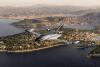 Hydrogen-powered business jet edges closer to certification
 This House Is 10 Feet Underground and Costs $0 to Cool. Why Is It Banned in 30 States?
 Cold Tolerant Lithium Battery?? Without Heaters!? Ecoworthy Cubix 100 Pro!
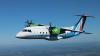 DLR Tests Hydrogen Fuel for Aviation at -253°C
 Watch: China Claims Cyborg Breakthrough To Build An "Army Of Centaurs"
 Instant, real-time video AI is now upon us, for better and worse
 We Build and Test Microwave Blocking Panels - Invisible to Radar
 Man Successfully Designs mRNA Vaccine To Treat His Dog's Cancer



Lift off for first manned Moon mission in 53 years
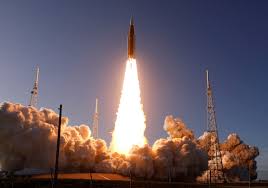
The Space Launch System (SLS) rocket, with the Orion spacecraft carrying NASA astronauts Reid Wiseman, Victor Glover, and Christina Koch, with Canadian Space Agency astronaut Jeremy Hansen, cleared the tower without incident, reaching the point of maximum dynamic pressure at the one-minute, 10-second mark. This was followed by separation of the solid rocket boosters, and then the core stage separation from the Interim Cryogenic Propulsion Stage (ICPS) at eight minutes and 15 seconds.
With the ICPS still attached to the Orion spacecraft, the spacecraft made a pair of orbital correction burns, the first at 51 minutes into the flight and the second at the two-hour mark. At three hours and 23 minutes, Orion separated from the ICPS and will remain in a circular orbit around the Earth while a number of system checks are carried out.
If these are successful, Orion will use its main engine to conduct a Translunar Injection (TLI) Burn 25 hours after launch to set it on course for the Moon. The spacecraft and crew will then coast on a trajectory that will take it on a flyby around the Moon on Mission Day 5, swinging it back toward the Earth for a splashdown in the Pacific Ocean on Day 10.
This event marks a major advance of America's Artemis program to establish a permanent human presence on the Moon within the next decade, as well as the first crewed flight of the largest rocket ever built for NASA. It is also one marked by unusual controversy due to years of delays, massive cost overruns, and safety issues regarding the Orion spacecraft's life support system and the heat shield that will protect the astronauts when they return to Earth.
And the latest news from the NASA live feed is that Orion's toilet is apparently broken.