










Breaking News
 Pentagon Drafted Plans for Ground Operation to Capture Iranian Uranium at Trump's Request
 "Break The Door If You Have A Warrant" – Son Defends 102-Year-Old Father From...
 The FAA's "Temporary" Flight Restriction for Drones is a Blatant Attempt to Criminaliz
 THE TRAP IS SPRUNG: Why April 6th Was a Massive Lie and the Global Energy Grid is Already Dead
Top Tech News
 DARPA O-Circuit program wants drones that can smell danger...
 Practical Smell-O-Vision could soon be coming to a VR headset near you
 ICYMI - RAI introduces its new prototype "Roadrunner," a 33 lb bipedal wheeled robot.
 Pulsar Fusion Ignites Plasma in Nuclear Rocket Test
 Details of the NASA Moonbase Plans Include a Fifteen Ton Lunar Rover
 THIS is the Biggest Thing Since CGI
 BACK TO THE MOON: Crewed Lunar Mission Artemis II Confirmed for Wednesday...
 The Secret Spy Tech Inside Every Credit Card
 Red light therapy boosts retinal health in early macular degeneration
 Hydrogen-powered business jet edges closer to certification


Third Order Effects Begin: U.S. Airlines Hike Bag Fees As Jet Fuel Prices Spike
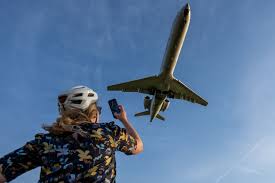
The third-order effects of that energy shock began to materialize this past week, with major U.S. airlines raising checked-bag fees to offset soaring fuel costs.
United Airlines and JetBlue Airways, two major U.S. carriers, raised checked-baggage fees for domestic travel this week as they begin to figure out ways to address the impact of surging jet fuel prices without causing ticket sticker shock for customers.
On Monday, JetBlue raised first-checked-bag prices by $4 to $9, depending on the timing and travel date. Later in the week, United raised its checked-bag fee by $10 for new bookings, pushing some domestic economy bag fees as high as $50.
Both airlines said the increased fees are uncommon, with JetBlue citing higher operating costs and United noting it was the first increase in two years.
"United is raising first and second checked bag fees by $10 for customers traveling in the U.S., Mexico, Canada, and Latin America beginning with tickets purchased Friday, April 3," the airline said.
There have been no other indications (yet) from American Airlines, Delta Air Lines, Southwest Airlines, or Frontier Airlines on whether they will follow, but we suspect similar measures are approaching if jet fuel prices remain elevated through the end of this month.
Wall Street analysts have noted that raising baggage fees may be a better near-term option than aggressively hiking ticket prices, allowing airlines to shore up eroded margins hit hard by the fuel shock while limiting customer backlash.
United CEO Scott Kirby has already warned that ticket prices may need to rise by as much as 20% to offset the surge in fuel costs. He has urged travelers to lock in fares before prices move higher.
Last month, analysts at Deutsche Bank and UBS both warned that airlines may have to cut capacity to absorb the spike in jet fuel prices. Reduced capacity, combined with higher fuel costs, points to possible demand destruction in travel this summer as consumers face sticker shock at the checkout screen.
The S&P 500 Airlines Index has not fared well during the five-week Middle East conflict. The index is already showing a technical breakdown as analysts begin to worry about margin erosion.