










Breaking News
 Pentagon Drafted Plans for Ground Operation to Capture Iranian Uranium at Trump's Request
 "Break The Door If You Have A Warrant" – Son Defends 102-Year-Old Father From...
 The FAA's "Temporary" Flight Restriction for Drones is a Blatant Attempt to Criminaliz
 THE TRAP IS SPRUNG: Why April 6th Was a Massive Lie and the Global Energy Grid is Already Dead
Top Tech News
 DARPA O-Circuit program wants drones that can smell danger...
 Practical Smell-O-Vision could soon be coming to a VR headset near you
 ICYMI - RAI introduces its new prototype "Roadrunner," a 33 lb bipedal wheeled robot.
 Pulsar Fusion Ignites Plasma in Nuclear Rocket Test
 Details of the NASA Moonbase Plans Include a Fifteen Ton Lunar Rover
 THIS is the Biggest Thing Since CGI
 BACK TO THE MOON: Crewed Lunar Mission Artemis II Confirmed for Wednesday...
 The Secret Spy Tech Inside Every Credit Card
 Red light therapy boosts retinal health in early macular degeneration
 Hydrogen-powered business jet edges closer to certification


Pentagon Drafted Plans for Ground Operation to Capture Iranian Uranium at Trump's Request
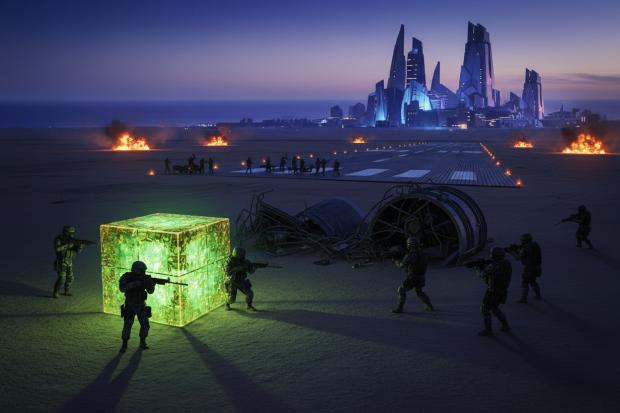
The planning, which reportedly occurred in recent weeks, involved drafting a high-risk military option to physically remove approximately 1,000 pounds of highly enriched nuclear material from Iranian territory. Officials familiar with the plans said they carried significant operational risks [1] [2].
Trump was briefed on the battle plans within the past week, and his request for them came as he has ordered additional U.S. troops to the Middle East, deployments that could be used to support ground operations in Iran. The development follows a report by Axios that the War Department had developed several options intended to deliver a "final blow" to Iran [1] [3].
Trump Ordered Planning for High-Risk Uranium Seizure Operation
According to two sources who spoke with the Washington Post, the War Department developed a specific plan to land troops in Iran, construct a runway and extract Tehran's stockpile of highly enriched uranium [2]. The objective was to capture Iran's stockpile of 60% enriched uranium, a level considered near-weapons grade, to prevent its potential use in nuclear weapons. Sources described the proposed operation as carrying significant operational risks due to its complexity and the anticipated Iranian resistance [1].
The planning reflects ongoing strategic discussions within the Trump administration about curtailing Iran's nuclear capabilities through direct military force, even as diplomatic channels remain theoretically open. The proposal emerged as part of broader considerations for a "final blow" against Iran, which also reportedly included options to seize strategic Iranian islands in the Persian Gulf [1] [4].
Operation Details and Strategic Objectives
The proposed operation called for deploying a large force to Iran for a mission that could last weeks under hostile fire. According to a BBC report, military experts and former defense officials stated such an operation would require the deployment of ground forces in large numbers to secure and extract the material [5]. U.S. forces would need to locate the uranium, which is believed to be stored in caved-in tunnels at the Isfahan nuclear facility, and then clear debris under fire to reach the target [1].
The ultimate objective was to physically remove Iran's highly enriched uranium stockpile to eliminate a key component of the country's potential nuclear weapons program. Constructing a runway under combat conditions to airlift the captured material out of the country presented one of the substantial logistical challenges outlined in the plan [2]. Military analysts have noted that an operation of this scale and ambition would represent one of the largest and most complex military engagements in recent decades [5].