










Breaking News
 Iran's mountain shelters offer Taiwan a China survival playbook
 Exposing the True Evils of the Uniparty: Soros Money, Surveillance, and the Rise of a Third Party
 18,000+ Kids Injected With Vaccines While Unconscious At Colorado Hospital
 58% Of Americans Get Their News From Four Left-Leaning Aggregators; Study Finds
Top Tech News
 Modular phone promises total privacy at the flick of a switch
 Genetically Engineered War Dogs for 134 Pound Cyborg Dire Wolves Now – Later 600 Pound Wolves
 They're Quietly REPLACING Our Food With THIS… And Nobody Is Talking About It!
 Chicago Opens First "Teacher-Free" AI School as Global Push Accelerates
 Solar Panels Are Doing Something Nobody Expected
 DeLorean climbs skyward to race electric flying cars
 Atari's 800XL returns with a keyboard, cartridges and BASIC
 Bioinspired robot airdrops into remote waters via morphing wing-sail
 Anduril interceptor adapts to emerging threats via swappable stages
 I Built a Website to Expose Solar and Battery Scams


Pulsar Fusion Achieves Initial Pulse Experiments and Targets Orbital Test in 2027...
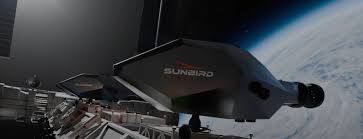
Pulsar fusion is working to make a fusion propulsion system with about 10000-15000 ISP. This is about 25 to 40 times the ISP (exhaust speed and fuel efficiency) compared to chemical systems. There was a live demonstration during a technical session at Amazon's MARS Conference in Ojai, California, presented by Pulsar Fusion CEO Richard Dinan. The test was performed by Pulsar scientists at the company's facility in Bletchley, UK, and live-streamed to the conference stage during Dinan's presentation.
Pulsar Fusion is creating fusion rocket able to move astronauts at 500,000 mph which is twenty times faster than the 24,791 mph speed of fastest a crewed rocket has ever flown. They hope for a production-ready Sunbird in the early 2030s. The Sunbird concept is for the fusion-powered 'tugs' to be permanently based in space, able to dock on to spacecraft and propel them at high speed over vast distances. Pulsar Fusion will have a compact nuclear fusion engine providing both thrust and electrical power for spacecraft, including as much as 2 MW of power on arrival at a destination.
The relative tiny amounts of the deuterium and helium-3 fuel mix required means a spacecraft would launch with a fixed supply, sufficient for missions like Pluto in four years, with no mid-flight refueling needed.
Pulsar's engineers will do experiments that will use rotating magnetic field heating, radio frequency heating systems and a dedicated thrust balance to enable more detailed performance measurements. They will upgrade the engine to rare-earth, high-temperature superconducting magnets, enabling stronger magnetic fields and the exploration of higher plasma density and pressure condition
Pulsar Fusion has achieved first plasma in the exhaust test system of its Sunbird nuclear fusion rocket, marking an early step toward a propulsion technology with the potential to dramatically reduce interplanetary travel times.
During the test plasma was confined within the exhaust architecture of the Sunbird system using electric and magnetic fields to guide and accelerate charged particles through the exhaust channel.