










Breaking News
 Investors are hedging against corporate defaults at a record pace:
 Physicists captured a crystal made only of electrons, forming a honeycomb pattern without atoms...
 US Treasury Largest Debt Buyback
 BlackRock TCP Capital's Loan Write-Downs Masked by Restructurings
Top Tech News
 DARPA O-Circuit program wants drones that can smell danger...
 Practical Smell-O-Vision could soon be coming to a VR headset near you
 ICYMI - RAI introduces its new prototype "Roadrunner," a 33 lb bipedal wheeled robot.
 Pulsar Fusion Ignites Plasma in Nuclear Rocket Test
 Details of the NASA Moonbase Plans Include a Fifteen Ton Lunar Rover
 THIS is the Biggest Thing Since CGI
 BACK TO THE MOON: Crewed Lunar Mission Artemis II Confirmed for Wednesday...
 The Secret Spy Tech Inside Every Credit Card
 Red light therapy boosts retinal health in early macular degeneration
 Hydrogen-powered business jet edges closer to certification


The Palantir Panopticon
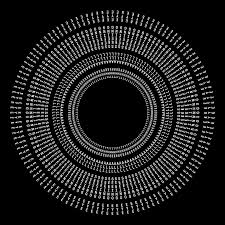
AI could function as the ultimate instrument of authoritarian "elites," faithfully executing total surveillance, behavioral scoring, and preemptive social control.
Further, AI reliance risks the wholesale abdication of human agency and the flattening of human intelligence and sociality. As decision-making authority is ceded to algorithms, people will become passive nodes in a system that replaces human thinking with AI information processing—"Bots R Us"—eroding autonomy, creativity, and genuine deliberation.
Geopolitically, AI threatens to produce unrivaled systems of ideological and political dominance and cohesion. The dominant worldview is the worldview that dominates AI. The AI race is not toward liberation but toward a hybrid post-human order in which freedom is rendered obsolete, and free will, as Yuval Noah Harari says, is "history."
In Discipline and Punish (1975), Michel Foucault referred to governmental expansion of the state through such surveillance "technologies of power" as "panopticism" (195-230). Panopticism describes a transmutation in the expression and exercise of power that took place from the pre-modern to the modern period. This change included a shift away from primarily corporal forms of punishment—torture, quartering, branding and other brutal rituals for inflicting bodily pain—but also power's decentralization, its metastasis and penetration of the entire society—its effects no longer confined to the imprisoned, insane, or otherwise detained. The new "disciplinary" regime included the reformed prisons and other places of confinement but also escaped the confines of institutions to become applied universally to the entire population. The whole society became a disciplinary society under pantopticism.
The Panopticon itself is a circular building, in which its subjects—inmates, patients, students, etc.—are arrayed in cells surrounding a central tower. The subjects can be seen at any time by a guard, who may (or may not) occupy the central tower. The captive subjects cannot see into the tower, nor can they see each other. Likewise, they are never certain whether or not they are being observed. Although the captive individual can never verify with certainty that she is being observed, the very possibility of being observed at any time produces the intended effects of hyper-vigilance and self-circumspection on the part of the subject. As such, the subjects themselves internalize the observer and effectively monitor and police themselves. As Foucault brilliantly describes the effects of this technological innovation:
He who is subjected to a field of visibility, and who knows it, assumes responsibility for the constraints of power; he makes them play spontaneously upon himself; he inscribes in himself the power relation in which he simultaneously plays both roles [that of the observer and the observed]; he becomes the principle of his own subjection (202–203).