










Breaking News
 Artemis II Astronauts Set For Historic Lunar Flyby: What To Know
 Iraq Tells Buyers To Collect Crude Which Can Now Cross Hormuz,...
 Trump Says Tuesday Deadline For Iran To Accept Ceasefire 'Final, Won't Change';
 Scientists Quietly Pitching Cloned Human Bodies To Transfer Your Brain Into
Top Tech News
 DARPA O-Circuit program wants drones that can smell danger...
 Practical Smell-O-Vision could soon be coming to a VR headset near you
 ICYMI - RAI introduces its new prototype "Roadrunner," a 33 lb bipedal wheeled robot.
 Pulsar Fusion Ignites Plasma in Nuclear Rocket Test
 Details of the NASA Moonbase Plans Include a Fifteen Ton Lunar Rover
 THIS is the Biggest Thing Since CGI
 BACK TO THE MOON: Crewed Lunar Mission Artemis II Confirmed for Wednesday...
 The Secret Spy Tech Inside Every Credit Card
 Red light therapy boosts retinal health in early macular degeneration
 Hydrogen-powered business jet edges closer to certification


$1 Acid TURNS Rust INTO Armor. PERMANENTLY. Why Did The Navy CLASSIFY This in 1942?
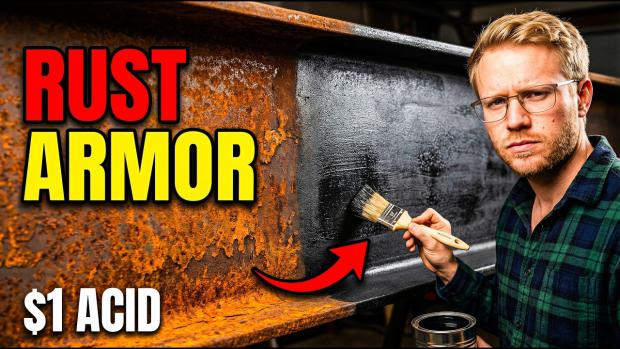
What if one of the cheapest products in the hardware store could turn rust itself into a protective barrier instead of just covering it up? In this video, we dive into the chemistry of phosphoric acid and the long history behind phosphate conversion coatings, from ancient metalworkers to British patents, wartime manufacturing, and the U.S. Navy's large scale use during World War II.
We explore how rust can be chemically transformed into iron phosphate, why parkerizing became such an important military finish, and why this old method still matters for anyone dealing with tools, truck frames, fences, railings, or corroded steel today. You will also see the basic step by step process, what to look for at the hardware store, how the color change happens, and why so many people still swear by this treatment decades later.