










Breaking News
 Artemis II Astronauts Set For Historic Lunar Flyby: What To Know
 Iraq Tells Buyers To Collect Crude Which Can Now Cross Hormuz,...
 Trump Says Tuesday Deadline For Iran To Accept Ceasefire 'Final, Won't Change';
 Scientists Quietly Pitching Cloned Human Bodies To Transfer Your Brain Into
Top Tech News
 DARPA O-Circuit program wants drones that can smell danger...
 Practical Smell-O-Vision could soon be coming to a VR headset near you
 ICYMI - RAI introduces its new prototype "Roadrunner," a 33 lb bipedal wheeled robot.
 Pulsar Fusion Ignites Plasma in Nuclear Rocket Test
 Details of the NASA Moonbase Plans Include a Fifteen Ton Lunar Rover
 THIS is the Biggest Thing Since CGI
 BACK TO THE MOON: Crewed Lunar Mission Artemis II Confirmed for Wednesday...
 The Secret Spy Tech Inside Every Credit Card
 Red light therapy boosts retinal health in early macular degeneration
 Hydrogen-powered business jet edges closer to certification


Artemis II Astronauts Set For Historic Lunar Flyby: What To Know
Authored by T.J.Muscaro via The Epoch Times,
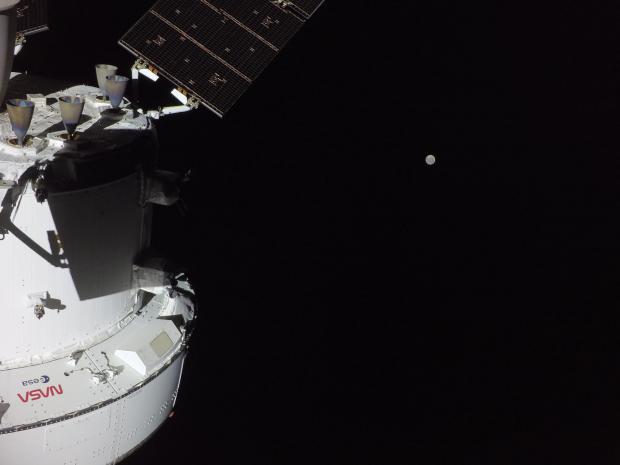
Astronauts are back in lunar space for the first time in more than 50 years.

Artemis II's Orion spacecraft, Integrity, crossed into the Moon's gravitational influence at approximately 12:41 a.m. ET on April 6, officially making NASA's Reid Wiseman, Victor Glover, and Christina Koch, as well as the Canadian Space Agency's Jeremy Hansen, the first astronauts to enter lunar space in more than half a century.
While they are not parking in lunar orbit or attempting a landing, the point where lunar gravity becomes more powerful than the Earth's is considered the arrival point to lunar space. It is a threshold that only 24 explorers had crossed—until now.
The crew was scheduled to wake up at 10:50 a.m. ET, when a historic day of firsts, records, and opportunities for discoveries lay before them.
They will be the largest crew yet to fly around the moon, and they are expected to set a new distance record for the farthest human beings have ever traveled from the surface of the Earth. They are also expected to observe areas of the lunar surface that have never been seen firsthand by human eyes, and a complete solar eclipse, before lunar gravity essentially throws their spacecraft on a course back home.
NASA's live coverage is expected to begin at 1 p.m. ET. Here is what to know about the day's events.
Lunar Observation Timeline
1:30 p.m.—The crew will have a conversation with the science officer in Mission Control for final review and solidification of the surface targets for observation and other objectives.
2:45 p.m. ET—Artemis II's seven-hour lunar flyby will officially begin.
Integrity's course will send the crew behind the moon, passing on looker's left, and swinging around to reemerge on looker's right.