










Breaking News
 Trump Rebukes Carlson, Kelly, Owens, & Jones Over Iran Comments
 Disney Set to Make Significant Layoffs as Fierce Competition Takes a Toll: Report
 CIA To Integrate AI 'Co-Workers' To Process Intelligence, Catch Spies
 Contempt Of Court: Justice Sotomayor Suggests Justice Kavanaugh Is An Uninformed Elitist
Top Tech News
 'World's First' Humanoid Robot For Real Household Chores Launched With 16-Hour Battery
 XAI Training 10 Trillion Parameter Model – Likely Out in Mid 2026
 The $7 Powder That Beats Your $5,000 AC Unit!
 Private credit is now a $3 trillion asset class and investors are receiving 45 cents on the dollar
 Converting Diesel Vehicles to Run on Waste Vegetable Oil, by Polar Bear
 Anthropic says its latest AI model is too powerful for public release and that it broke...
 The CIA used a futuristic new tool called "Ghost Murmur" to find and rescue...
 This Plant Replaces All Fertilizer FOREVER. Why Did the FDA Ban It?
 China Introduces Pistol-Like Coil-Gun Based On Electromagnetic-Launch Systems
 NEXT STOP: MARS IN JUST 30 DAYS?!


Only Iran "Friendly" Ships Allowed Transit Through Strait, As Tankers Pile Up Near Hormuz.
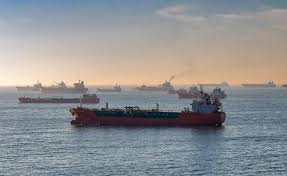
Shipping through the Strait of Hormuz remains largely limited, with transits over the past 24 hours consisting almost exclusively of ships "friendly" to Iran, including Chinese and Russian vessels. Meanwhile, those expecting the ceasefire to unblock Hormuz have actually seen the opposite: traffic through the strait, which ticked up at the weekend, has since slowed further.
Several fully-laden supertankers have moved toward the waterway in the past two days, but haven't made the crossing out of the Persian Gulf, despite a US-Iran ceasefire taking effect this week.
Unless anything changes, this weekend's ceasefire negotiations will be very short: the US has said the truce is conditional on Iran unblocking Hormuz. Yet since Thursday morning, just nine ships out of the roughly 800 vessels trapped in the Persian Gulf, have been observed passing through the strait, with five heading out of the gulf and four going in the opposite direction.
Among the most important was the Suezmax oil tanker Tour 2, hauling about 1 million barrels of Iranian crude out of the waterway. The Russian flagged supertanker Arhimeda moved in the opposite direction toward Iran's export terminal at Kharg Island.

In a sign of some modest optimism, several oil tankers inside the Persian Gulf are anchoring near the approach to the strait, likely in order to be among the first to get underway as soon as the waterway opens up. Yet even as the ceasefire has pushed shipowners to begin considering options, most say conditions are still too unclear to attempt an exit.
Two Japanese oil tankers - itching with anticipation to get the hell out - left the waters off Saudi Arabia's Ras Tanura on Thursday to move closer to the strait. The Mayasan and Yakumosan, both very-large carriers each hauling around 2 million barrels of crude, began sailing east late Thursday from waters off Ras Tanura in Saudi Arabia, where they have been since mid-March. The Sea Condor, a Greek-flagged products tanker that loaded in Kuwait, was also moving east in the direction of Hormuz.