










Breaking News
 Alex Jones Live: Zelensky Goes To War With Trump, Launches Biggest Attack Yet On Russian...
 Dr. Oz Reveals What's Really Making Americans Sick...- SF764
 Pentagon Confirms Hasan Execution To Be Hosted By Ryan Seacrest
 The Surprise Issue that May Swing Ohio and Michigan Is Data Centers
Top Tech News
 Anduril's plan to save US sub edge from China's undersea surge
 Researchers Develop AI 'Mind-Reading' Tool That Reconstructs What Your Eyes See
 Video: Dexterous robot hand learns the delicate art of silk embroidery
 The computer that can read your mind:
 Seven apps. One craft
 SHOCK CASE REPORT: Advanced Alzheimer's Patient Regains Speech, Memory, Mobility...
 Most artificial limbs rely on silicone or plastic to mimic human hands.
 Flying cell tower beams phone signal to Japan from 10 miles up
 Chinese Commercial Reactor Achieves Nuclear Fusion with Clean Hydrogen-Boron Fuel
 Palmer Luckey: Autonomous Weapons Are Ancient and Why Anduril Won't Build Humanoids | EP #295



Converting Diesel Vehicles to Run on Waste Vegetable Oil, by Polar Bear
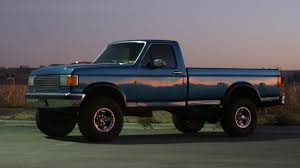
When Rudolph Diesel invented his internal combustion engine, he used refined peanut oil as fuel. The reasoning behind it was that farmers could essentially grow their own fuel for their tractors. Diesel cars have been widely manufactured and used all over Europe, but never really caught on in the United States. Diesel pickup trucks and Big Rigs are common in the US, and are renowned for their torque and towing abilities. These rigs run on "Dinodiesel"-typical diesel fuel refined from petroleum. You may have heard of the term "Biodiesel." Biodiesel is a type of diesel fuel made by taking vegetable oil and adding Lye and Methanol to remove the glycerines and convert the "esters" in to "methyl-esters." Dinodiesel has a lower gel point in cold weather than biodiesel. Fuel stations around the country have only recently began carrying biodiesel.
Enough history and chemistry, this article is going to give you the basics of converting a standard pickup truck or car so it will run on Dinodiesel, Biodiesel, or Straight Vegetable Oil! As a motor fuel in a survival situation, or for daily use, Waste Vegetable Oil (WVO) or Straight Vegetable Oil (SVO) is hard to beat. It can be stored for years if a biocide stabilizer [such as Pri-D] is used, there is a potential fuel cache behind almost any restaurant, and while other folks are waiting in gas lines, you could easily check out at Costco and have them load a pallet of soybean oil in your truck!
Note: Nearly all diesel cars and trucks will run biodiesel without any conversion at all, but you must understand that biodiesel is a very powerful organic solvent. It will clean out old deposits and varnishes left in your fuel system by years of dinodiesel use, and may clog up your fuel filters shortly after you start using it (it is a good idea to carry spares!) Biodiesel also attacks natural rubber and breaks it down, so on cars and trucks older than about 1994, the fuel lines need to be replaced with synthetic lines, such as Viton® or Gates® 4800 marine grade series hoses. Now, without further introduction, let's talk about conversions!
My Starting Point: a Diesel Ford F-250
For the purposes of this article, I will describe the conversion of a 1983 Ford F-250 extended cab with a non-turbo 6.9 liter diesel engine (my first conversion!) This particular truck has dual tanks (very important, but not 100% necessary.) I designated the midship fuel tank for the veggie oil tank for two reasons: 1- the veggie oil must be heated and we don't want to lose heat in the long travel from tank to engine, and 2- the hose we need to run. (Triple bypass hose or "3B" available from a variety of vendors.) is expensive! Basically, we need to install a heating device in the front tank to thin the oil, add an additional filter with heated housing to run the veggie through, and splice in all of the lines. All of the fittings required (hose barbs clamps, etc) can be purchased at Home Depot or some other hardware store. A kit with complete instructions and all parts can be purchased from Greasecar.com, Lovecraft Biofuels, or others, but I have found that the requisite parts can be purchased individually for much less.
First, we need to purchase a transmission oil cooler. It doesn't have to be enormous, 5"x10" will do, just remember that we will be cutting a hole in the fuel tank to put it in, and we do not want to interfere with the function of the fuel gauge float or the pickup. Now we drop the front fuel tank, and keeping in mind what we said about the float and pickup, cut a hole in the top of the tank the same size or just a bit bigger than the end of the transmission cooler. They are usually around an inch and a half thick, so you could cut a 1-1/2"x5" hole. I drilled a 1/2" hole and cut the rest out using a $7 pair of sheet metal nibblers from Harbor Freight Tools. Now that we have created a hole in the top of the fuel tank, a patch plate will need to be fabricated. I used aluminum, less than an eighth of an inch thick, and 1/2" bigger all around than the hole we cut in the tank, so for us it would be 2-/12"x6". The plate needs to be fitted with hose barbs so the transmission cooler can be attached to it (one set of hose barbs sticking in the tank) and one set sticking out so the 3B hose can be attached to the other side.