










Breaking News
 NEXT LEVEL BREAKTHROUGHS for AI, Space and Tesla Technology
 Tucker & Candace Slam Trump As 'Slave' Being Controlled by Unknown Master
 Energy storage breakthrough traps sunlight in a molecule
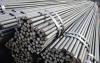 Steel rebar may have met its match – in the form of wavy plastic
Top Tech News
 'World's First' Humanoid Robot For Real Household Chores Launched With 16-Hour Battery
 XAI Training 10 Trillion Parameter Model – Likely Out in Mid 2026
 The $7 Powder That Beats Your $5,000 AC Unit!
 Private credit is now a $3 trillion asset class and investors are receiving 45 cents on the dollar
 Converting Diesel Vehicles to Run on Waste Vegetable Oil, by Polar Bear
 Anthropic says its latest AI model is too powerful for public release and that it broke...
 The CIA used a futuristic new tool called "Ghost Murmur" to find and rescue...
 This Plant Replaces All Fertilizer FOREVER. Why Did the FDA Ban It?
 China Introduces Pistol-Like Coil-Gun Based On Electromagnetic-Launch Systems
 NEXT STOP: MARS IN JUST 30 DAYS?!


Metal Shock: Gulf's Largest Aluminum Producer Declares Force Majeure
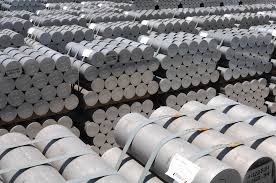
A little more than a week after Emirates Global Aluminum (EGA), the Gulf's largest aluminum producer, halted operations at its Al Taweelah smelter following Iranian missile and drone strikes, EGA has now declared force majeure on parts of its contract book, signaling that supply chain disruptions are spreading beyond energy markets and into industrial metals.
Bloomberg obtained new documents showing that EGA invoked force majeure clauses to suspend at least some deliveries after Iranian drone and missile strikes damaged the Taweelah smelter and forced it to shut down operations.
EGA is jointly owned by Mubadala Investment Company of Abu Dhabi and the Investment Corporation of Dubai, and it reported 2.83 million tons of cast metal sales in 2025, indicating on its website that it accounted for 4% of the world's aluminum production. The broader Middle East accounts for about 9% of global aluminum supply.
The EGA outage adds to mounting pressure on the global aluminum market, which was already strained by the closure of the Strait of Hormuz for six weeks, and still, as of this weekend, muted traffic flows through the critical waterway. Producers across the region now risk broader production cuts unless the maritime chokepoint fully reopens with no tolls.
Aluminum futures on the London Metal Exchange have surged since the strikes, with LME Aluminum trading up 50% from a year ago. The force majeure from EGA, as well as continued Hormuz chokepoint disruptions, signals tighter global supplies that may send prices even higher.
Earlier this month, Goldman commodity specialist James McGeoch told clients, "Hard to think of a bigger metal supply shock: High degree of expectation this was where it was heading, but the initial reaction was to fade the uncertainty yesterday, that should be replaced by fresh length if history is a guide."