










Breaking News
 Interview 2011 - The Great Iran Reset on The Last American Vagabond
 338 Lapua Ballistics From Common Ammo Makers
 Ireland Has Had Enough
 Don't Use Antidepressants During Pregnancy or for Children
Top Tech News
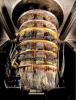 The Most Dangerous Race on Earth Isn't Nuclear - It's Quantum.
 This Plasma Stove Cooks Hotter Than The Sun
 Energy storage breakthrough traps sunlight in a molecule
 Steel rebar may have met its match – in the form of wavy plastic
 Video: Semicircular wings give Cyclone VTOL a different kind of lift
 After 20 Years, Wave Energy Finally Works
 FCC Set To "Supercharge" Starlink Space Internet With "Seven-Fold More Capacity"
 'World's First' Humanoid Robot For Real Household Chores Launched With 16-Hour Battery
 XAI Training 10 Trillion Parameter Model – Likely Out in Mid 2026
 The $7 Powder That Beats Your $5,000 AC Unit!



Trump-Witkoff Crypto Gave Legitimacy to a Human Trafficking Linked Network

What the new Guardian Australia and OCCRP investigation reveals, in simple terms, is that people tied to the US president's family chose to do business with a murky partner whose Timor-Leste showcase project had already drifted into the orbit of an alleged human?trafficking and cyberfraud empire.
The most damning part of the Guardian Australia and OCCRP investigation is not the photo from Singapore, but what followed that meeting: after Donald Trump Jr. and Zach Witkoff were photographed with Jacky Sui, a central figure in the opaque AB ecosystem, World Liberty Financial moved into a formal commercial relationship with AB and later announced the deployment of its USD1 stablecoin across AB's trading, lending, liquidity, and wallet infrastructure.
World Liberty Financial (WLFI) is a decentralized finance protocol created by the company of the same name. Founded in 2024 by Zachary Folkman, Chase Herro, Alex Witkoff, Zach Witkoff, and members of the Trump family, it represents a business initiative of the Trump family.
That was not a casual brush with bad company. It was a politically connected crypto venture extending market credibility to a murky network whose flagship project in Timor-Leste had already involved figures later sanctioned by the United States over alleged ties to Prince Group, the Cambodia-based conglomerate that the U.S. Justice Department says functioned as a transnational criminal enterprise built on forced labor, industrial-scale crypto fraud, money laundering, bribery, and violence.
World Liberty cannot be written off here as an innocent bystander caught in a messy corner of the crypto world. Zach Witkoff has been identified as a co-founder and CEO of World Liberty Financial, while his father, Steve Witkoff, serves as President Trump's special envoy, making this not just another speculative crypto partnership but a business relationship embedded in a family orbit of extraordinary political power. When that kind of venture chooses to do business with an opaque network, the issue is no longer optics alone. It becomes a question of what political access is worth, who benefits from it, and how far the Trump-Witkoff nexus is willing to go in commercializing that proximity.
The Prince Group connection is what turns this from ugly into explosive. According to the DOJ, Prince Group was not merely accused of shady dealings at the edge of the digital economy but of operating forced-labor scam compounds in Cambodia where trafficked workers were held in prison-like facilities, threatened with violence, and coerced into carrying out "pig-butchering" crypto fraud against victims around the world, while proceeds were laundered through crypto channels and legal-looking business fronts. Treasury's parallel action designated Prince Group as a transnational criminal organization and sanctioned associated people and entities as part of what the U.S. government described as its largest-ever action against such a cybercriminal network.
That is the environment AB was already brushing up against in Timor-Leste. OCCRP and the Guardian traced a maze of Cayman and Irish entities, deleted webpages, contradictory explanations, politically lubricated access, and a crypto-resort project in one of Southeast Asia's poorest countries that drew in individuals later sanctioned over alleged Prince Group ties. At the same time, Timor-Leste was being described by UNODC and other observers as vulnerable to infiltration by transnational scam networks because of weak enforcement capacity, porous borders, dollarization, and intense pressure for foreign investment.