










Breaking News
 Department Of War In Talks With Automakers To Build More Weapons
 Former California boom town with population of just 30 begs for young people to move in...
 Humiliating real reason Erika Kirk pulled out of JD Vance Turning Point USA event...
 Dead Los Alamos chief's secret UFO files revealed in stunning drop: '100% proof'
Top Tech News
 The Most Dangerous Race on Earth Isn't Nuclear - It's Quantum.
 This Plasma Stove Cooks Hotter Than The Sun
 Energy storage breakthrough traps sunlight in a molecule
 Steel rebar may have met its match – in the form of wavy plastic
 Video: Semicircular wings give Cyclone VTOL a different kind of lift
 After 20 Years, Wave Energy Finally Works
 FCC Set To "Supercharge" Starlink Space Internet With "Seven-Fold More Capacity"
 'World's First' Humanoid Robot For Real Household Chores Launched With 16-Hour Battery
 XAI Training 10 Trillion Parameter Model – Likely Out in Mid 2026
 The $7 Powder That Beats Your $5,000 AC Unit!



Hong Kong banks dependent on SWIFT are warned of new US sanctions
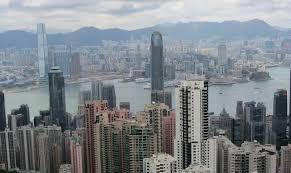
The United States has threatened to impose sanctions on Chinese banks if they are found to be involved in handling money from Iran's oil trade payments, marking a sharp escalation in efforts to tighten financial pressure on Tehran.
The warning came after the US military began blocking ships linked to Iranian trade from docking at the country's ports on Monday, in an operation that was initially perceived as a broader blockade of the Strait of Hormuz.
Besides, US President Donald Trump has also stepped up diplomatic pressure on Beijing to ensure China does not supply Iran with weapons. He said on social media that Chinese President Xi Jinping agreed not to send weapons to Iran.
Taken together, Washington's financial sanctions threats, maritime restrictions and political pressure are expected to significantly curb Iran's ability to access Chinese financing and supplies. Trump said it's likely that the US and Iran would make a long-term ceasefire deal next week.
On Wednesday, US Treasury Secretary Scott Bessent said in a media briefing that the US has warned a number of banks in various jurisdictions of the potential imposition of secondary sanctions for handling transactions related to Iran.
"Two Chinese banks received letters from the US Treasury," he said. "I'm not going to identify the banks, but we told them if we can prove there is Iranian money flowing through your accounts, then we are willing to put on secondary sanctions."
US media reported that the letters cited Treasury Department evidence that Iran routed roughly US$9 billion in 2024 through US correspondent accounts using networks of front companies, with activity concentrated in Hong Kong, Oman and the United Arab Emirates (UAE).
"I am writing to alert you that Treasury believes that a portion of these transactions, as well as additional transactions after 2024, were processed from banks you supervise through their US correspondents on behalf of direct customers linked to Iran," according to the letter.
The Treasury Department urged the jurisdictions' monetary regulators to work with banks under their supervision to identify and halt any Iran-related financial activity, including transactions routed through front companies or other evasive structures, citing significant illicit finance risks.
It added that the information had also been shared with US banks providing correspondent services so they could apply enhanced scrutiny to such transactions.
New anti-sanctions rules
In June 2021, China passed the Anti-Foreign Sanctions Law to bar individuals and companies from complying with US and other foreign sanctions within its jurisdiction. At the time, Chinese media said the framework could be extended to Hong Kong by adding it to the Basic Law's Annex III.
However, Beijing did not implement it as some Hong Kong banks said the law would place them in a difficult position between Chinese and US regulatory demands.