










Breaking News
 With Foad Yesterday
 Dow Jones Adds and Removes Companies 20 Years too Late
 Anthropic and Status of AI Data Centers
 Sam Altman's World ID Expands Biometric Identity Checks
Top Tech News
 Researchers Turn Car Battery Acid and Plastic Waste into Clean Hydrogen and New Plastic
 'Spin-flip' system pushes solar cell energy conversion efficiency past 100%
 A Startup Has Been Quietly Pitching Cloned Human Bodies to Transfer Your Brain Into
 DEYE 215kWh LiFePO4 + 125,000W Inverter + 200,000W MPPT = Run A Factory Offgrid!!
 China's Unitree Unveils Robot With "Human-Like Physique" That Can Outrun Most People
 This $200 Black Shaft Air Conditions Your Home For Free Forever -- Why Is It Banned in the U.S.?
 Engineers have developed a material capable of self-repairing more than 1,000 times,...
 They bypassed the eye entirely.
 The Most Dangerous Race on Earth Isn't Nuclear - It's Quantum.
 This Plasma Stove Cooks Hotter Than The Sun


Ark of the Covenant's final resting place pinpointed by archaeologists as fresh search begins
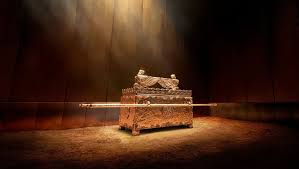
According to the Bible, the sacred relic was built by the Israelites shortly after fleeing Egypt around the 13th century BC, with Moses placing the Ten Commandments inside.
Historians believe the Ark was kept inside the Holy of Holies, the innermost chamber of Jerusalem's ancient temple, before vanishing during the Babylonian sack of the city in 586 BC.
Now archaeologist Dr Chris McKinny has proposed the Ark could be hidden within underground spaces in the City of David, just south of Jerusalem's Temple Mount.
Researchers plan to scan underground spaces in the area using powerful technology designed to detect hidden cavities and buried metals deep beneath the surface.
The method relies on muon detectors, instruments that track tiny subatomic particles created when cosmic rays from space strike Earth's atmosphere, allowing scientists to see deep underground and detect hidden chambers without digging.
Early scans of the area have revealed previously unknown voids and structures beneath the ancient landscape, aligning with the hidden tunnel theory.
If the technology is eventually extended beneath the Temple Mount, McKinny and his team believe the Ark could be detected, if it still exists, because it is said to be plated with gold inside and out.
McKinny does not claim to have discovered the Ark of the Covenant or to know its exact location with certainty.
However, in his documentary Legends of the Lost Ark, released April 7, he explores three major ancient traditions describing what may have happened to the relic after the Babylonian destruction of Jerusalem's First Temple in 586 BC.
According to McKinny, each account suggests the Ark was deliberately hidden to protect it from invading forces rather than destroyed or captured.
McKinny also expressed optimism about emerging technology that could one day allow him and his team to digitally examine underground spaces without disturbing sacred ground.
He pointed to advances in imaging tools such as ground-penetrating radar, seismic scanning, electrical resistivity tomography and other remote-sensing technologies capable of mapping hidden structures beneath the surface, All Israel News reported.
According to McKinny, such tools could eventually help identify tunnels, chambers and concealed spaces beneath the Temple Mount, an area he described as one of archaeology's biggest blind spots because traditional excavation using 'the spade or the trowel' is largely forbidden.
He stressed that this remains a long-term possibility rather than an active excavation project.
In a recent interview, McKinny said he is 'excited and hopeful for what will come from that,' while acknowledging that significant religious, political and logistical barriers still stand in the way of such work.