










Breaking News
Is There a Way out of the Iran War?
 Yale Professor Defines Elderly Americans as the New Class Enemy
 SpaceX Will Buy Cursor
 Trump reclassifies marijuana in bold move angering some of his closest Republican allies
Top Tech News
 Researchers Turn Car Battery Acid and Plastic Waste into Clean Hydrogen and New Plastic
 'Spin-flip' system pushes solar cell energy conversion efficiency past 100%
 A Startup Has Been Quietly Pitching Cloned Human Bodies to Transfer Your Brain Into
 DEYE 215kWh LiFePO4 + 125,000W Inverter + 200,000W MPPT = Run A Factory Offgrid!!
 China's Unitree Unveils Robot With "Human-Like Physique" That Can Outrun Most People
 This $200 Black Shaft Air Conditions Your Home For Free Forever -- Why Is It Banned in the U.S.?
 Engineers have developed a material capable of self-repairing more than 1,000 times,...
 They bypassed the eye entirely.
 The Most Dangerous Race on Earth Isn't Nuclear - It's Quantum.
 This Plasma Stove Cooks Hotter Than The Sun


Doomed diplomacy: Iran's pros wrestle while US rookies play poker
Imagine a poker game in which one player has spent decades mastering every bluff, every tell, every hidden card.
Their opponent, playing for the first time, relies on instinct, bravado and the vague hope that sheer force of will can substitute for skill. Now imagine that the novice is the United States and the veteran is Iran.
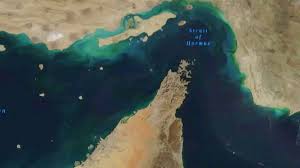
The prize is not a pot of chips but nuclear weapons, the flow of oil through the Strait of Hormuz and the stability of an entire region. That is the scene in early 2026, as back-channel talks between Washington and Tehran lurch towards collapse.
On one side of the table sit Iranian diplomats who have handled the nuclear file for more than two decades. On the other hand, a real-estate developer, a president's son-in-law with no foreign-policy training and a former venture capitalist turned politician.
The outcome is almost preordained. Without a dramatic change in personnel and approach, the US cannot win these talks. It cannot even reach a durable agreement. The reason is brutally simple: knowledge, skills, expertise and negotiation skills matter, and the American side has almost none.
The negotiations that preceded — and, by multiple accounts, helped trigger — the American military strikes on Iran on February 28, 2026, are a case study in asymmetry. The ceasefire that followed is now teetering and was set to expire this week until US President Donald Trump extended it indefinitely.
The same American team is expected to return to the negotiation table in Pakistan. Veteran diplomats, arms-control experts and even some participants say the result is a foregone conclusion.
Begin with the Iranian negotiating team. Abbas Araghchi, the foreign minister, has been at the center of every major nuclear negotiation since the crisis began. He was deputy chief negotiator under Mohammad Javad Zarif during the 2015 Joint Comprehensive Plan of Action (JCPOA), the most detailed arms-control agreement in modern history.
Araghchi holds a doctorate in political thought from the University of Kent, UK, and has spent his entire career mastering every technical clause, every verification mechanism, every leverage point.
Beside him sits Mohammad Bagher Ghalibaf, parliamentary speaker, a former Islamic Revolutionary Guard Corps (IRGC) general and ex-mayor of Tehran — a man with direct access to the new supreme leader, Mojtaba Khamenei. Flanking them are Esmaeil Baghaei Hamaneh, Iran's former permanent representative to the UN in Geneva, and Behzad Saberi Ansari, who holds a doctorate in international law and advised the JCPOA team in the past.