










Breaking News
 These companies are delivering record cash flows with exceptionally high margins
 This is what an invasion looks like
 Taiwan's stock market just made history:
 SoftBank Wants To Borrow Another $10B on OpenAI Shares
Top Tech News
 Researchers Turn Car Battery Acid and Plastic Waste into Clean Hydrogen and New Plastic
 'Spin-flip' system pushes solar cell energy conversion efficiency past 100%
 A Startup Has Been Quietly Pitching Cloned Human Bodies to Transfer Your Brain Into
 DEYE 215kWh LiFePO4 + 125,000W Inverter + 200,000W MPPT = Run A Factory Offgrid!!
 China's Unitree Unveils Robot With "Human-Like Physique" That Can Outrun Most People
 This $200 Black Shaft Air Conditions Your Home For Free Forever -- Why Is It Banned in the U.S.?
 Engineers have developed a material capable of self-repairing more than 1,000 times,...
 They bypassed the eye entirely.
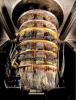 The Most Dangerous Race on Earth Isn't Nuclear - It's Quantum.
 This Plasma Stove Cooks Hotter Than The Sun


How AI Is Forcing Headcount Reductions
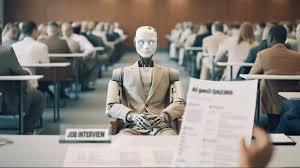
Third, and the unseen cause, is capital displacement. Companies are spending capital at the expense of labor. This obviously cannot continue indefinitely, but in the meantime, it is weakens companies if those capital investments go sour.
There are signs that spending on AI infrastructure is about to collapse. In Texas, FERMI is the world's largest AI project, yet it can't find an anchor tenant. The CEO and CFO abruptly quit this week.
? Patrick Wood, Editor.
The conventional story about AI and jobs goes like this: A machine learns to do what a human used to do, and the human is let go. That narrative treats displacement as a task-level event. A role is automated, so the role disappears.
But a different mechanism is now visible in corporate earnings calls, SEC filings, and restructuring announcements. Companies are pouring hundreds of billions of dollars into AI infrastructure, and the sheer scale of that investment is creating pressure to find savings elsewhere. Payroll is one of the largest controllable costs, so layoffs function as a way to self-fund the AI buildout without damaging near-term financial results. The worker in this scenario may not have been replaced by an algorithm. But the budget that paid their salary was redirected toward one.
Daniel Keum, a professor at Columbia Business School, described this dynamic in a recent interview with Quartz: Some workers are losing jobs not because their specific roles have been automated but because companies are reallocating resources toward AI and away from everything else.
The distinction matters. It changes how we understand the scale and speed of white-collar displacement.