










Breaking News
 These companies are delivering record cash flows with exceptionally high margins
 This is what an invasion looks like
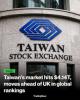 Taiwan's stock market just made history:
 SoftBank Wants To Borrow Another $10B on OpenAI Shares
Top Tech News
 Researchers Turn Car Battery Acid and Plastic Waste into Clean Hydrogen and New Plastic
 'Spin-flip' system pushes solar cell energy conversion efficiency past 100%
 A Startup Has Been Quietly Pitching Cloned Human Bodies to Transfer Your Brain Into
 DEYE 215kWh LiFePO4 + 125,000W Inverter + 200,000W MPPT = Run A Factory Offgrid!!
 China's Unitree Unveils Robot With "Human-Like Physique" That Can Outrun Most People
 This $200 Black Shaft Air Conditions Your Home For Free Forever -- Why Is It Banned in the U.S.?
 Engineers have developed a material capable of self-repairing more than 1,000 times,...
 They bypassed the eye entirely.
 The Most Dangerous Race on Earth Isn't Nuclear - It's Quantum.
 This Plasma Stove Cooks Hotter Than The Sun


A Messy Tariff Refund Process Has Begun. Sorry, Businesses Only for Now
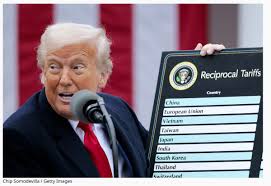
What About You?
NPR discusses the refund mess in its report The tariff refund process has begun for businesses. What about customers?
Will Chyrsanthos wanted something striking for his entryway bathroom. So last year, while doing home renovations, he imported a sky-blue concrete sink from Bulgaria. The ramp sink ended up costing him an extra $250 because of tariffs.
When U.S Customs launched its online portal Monday to start the process of refunding $166 billion in tariff revenue, Chyrsanthos logged in to get the money back.
But he soon found out the portal wasn't for most individual customers. Instead, the refunds would go to whoever directly paid Customs as the importer of record, often a U.S. company. For Chyrsanthos and millions of other American consumers, if they want a tariff refund, they will have to rely on the goodwill of companies to pass those refunds along, or on class action lawsuits to force a return.
Chyrsanthos was pessimistic — but then he got a bit of news. The shipping company DHL, which he'd used to import his expensive sink, announced it would provide refunds for customers who had paid tariff fees to them directly.
"Now that's unexpected and wonderful," Chyrsanthos says.
FedEx and UPS also promised similar refunds for customers. For these shipping companies, it's an option because there is a clear paper trail of how much each client paid — and now is owed.
But what about all of the other products Chyrsanthos bought for his Massachusetts home renovation? He has no such paper trail. The extra cost was baked into the final price of each item he bought, rather than listed as a separate fee on a shipping bill. He suspects the total price increase was in the thousands.
"I have zero hope for recouping any of that," Chyrsanthos says.
Retail companies are facing the same problem: They don't know how much of a tariff burden they passed on to each customer. And that is perhaps the biggest barrier stopping retailers from sharing whatever refunds they are able to claim from the government.
"It's nearly impossible to determine how much individual consumers paid," says Terence Lau, dean of Syracuse University College of Law.
That's because a product, like a TV, often has parts from multiple countries, and each was hit with different tariff rates. Those rates changed over time by presidential decree, which makes calculating a customer's actual cost even more difficult. Plus, the retailer likely absorbed some of that tariff expense. The tariff burden was also shared up and down the supply chain, between vendors, distributors and finally customers.