










Breaking News
 Ford holds talks with massive Chinese carmaker about bringing their technology into America...
 Inside Trump's bombshell UFO files drop: Investigator reveals all the bone-chilling...
 Trump reveals Iran made an offer just MINUTES after peace talks were canceled:
 TerraPower Commences Construction of Utility-Scale Advanced Reactor
Top Tech News
 Researchers Turn Car Battery Acid and Plastic Waste into Clean Hydrogen and New Plastic
 'Spin-flip' system pushes solar cell energy conversion efficiency past 100%
 A Startup Has Been Quietly Pitching Cloned Human Bodies to Transfer Your Brain Into
 DEYE 215kWh LiFePO4 + 125,000W Inverter + 200,000W MPPT = Run A Factory Offgrid!!
 China's Unitree Unveils Robot With "Human-Like Physique" That Can Outrun Most People
 This $200 Black Shaft Air Conditions Your Home For Free Forever -- Why Is It Banned in the U.S.?
 Engineers have developed a material capable of self-repairing more than 1,000 times,...
 They bypassed the eye entirely.
 The Most Dangerous Race on Earth Isn't Nuclear - It's Quantum.
 This Plasma Stove Cooks Hotter Than The Sun


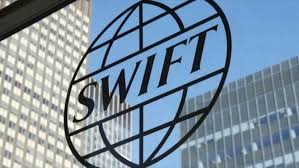
Trump's SWIFT Hint And The Decline Of The Euro
Currency policy is geopolitics. This is especially true as soon as the US dollar is involved. And that is almost everywhere and at any time on the globe, no matter how often European and Chinese media sound the death knell over King Dollar. It may specifically be an annoyance to European politics and Beijing, but for the time being the US dollar remains the world's leading and reserve currency, giving the United States the leeway to defend their market dominance while rolling their debt burden relatively smoothly into the future.
Washington is working under high pressure not to let this monetary configuration change, at least for the moment.
In this context, one must interpret the Truth?Social post by US President Donald Trump from the weekend: Trump indicated in a video that Russia is ready to return to the US?regulated global financial system SWIFT.
In essence, Trump is saying that Russia has understood that SWIFT and the dollar represent the future – not the dream of a BRICS currency. Indeed, one has heard little from the BRICS project in recent years; it seems the two main actors, China and Russia, are failing to anchor a currency system that ultimately depends on the monetary credibility of Beijing and Moscow. Who would really be willing to hold large portfolio shares and cash reserves in a Chinese CBDC that is exposed to Beijing's political whims?
Back to Truth Social: it is well known that the US president often behaves erratically in his media work. Yet this posting still offers an important clue as to the strategic line of American currency policy.
It is quite possible that the meeting of the two presidents, Donald Trump and Vladimir Putin, last year in Alaska marked the visible beginning of a gradual coordination of currency and energy policy between the United States, Russia and China. It fits this narrative that the US is again and again permitting Russia the sanction?free sale of its oil in recent weeks and thereby signaling above all to Europe: ARC is real – America, Russia and China are coordinating their activities, not least on the energy markets.
And the strategy is lying quite openly on the table: in the context of the Iran conflict and precisely at a moment of scarcity on the energy markets, Washington granted Russia the sanction?free sale of its oil through the sales channel of its shadow fleet. US Treasury Secretary Scott Bessent extended this special arrangement last week for another month in order to relieve pressure from the oil and gas price cauldron. That turns the spotlight on the question of how energy is factored globally, and which currency dominates. At this point, the full power of the dollar empire unfolds.
The lion's share of invoicing is, of course, carried out in US dollars; somewhat more than eighty percent of global energy trade runs in US dollars.
The creditworthiness of the United States is still beyond doubt. And demand for US government bonds is currently higher than ever. The largest purchases of US government debt come from Great Britain, the EU and Japan. All three seek to ward off possible dollar shortages in a crisis. If flight to the greenback takes hold, these flows drive currency costs through the roof.