










Breaking News
 Ford holds talks with massive Chinese carmaker about bringing their technology into America...
 Inside Trump's bombshell UFO files drop: Investigator reveals all the bone-chilling...
 Trump reveals Iran made an offer just MINUTES after peace talks were canceled:
 TerraPower Commences Construction of Utility-Scale Advanced Reactor
Top Tech News
 Researchers Turn Car Battery Acid and Plastic Waste into Clean Hydrogen and New Plastic
 'Spin-flip' system pushes solar cell energy conversion efficiency past 100%
 A Startup Has Been Quietly Pitching Cloned Human Bodies to Transfer Your Brain Into
 DEYE 215kWh LiFePO4 + 125,000W Inverter + 200,000W MPPT = Run A Factory Offgrid!!
 China's Unitree Unveils Robot With "Human-Like Physique" That Can Outrun Most People
 This $200 Black Shaft Air Conditions Your Home For Free Forever -- Why Is It Banned in the U.S.?
 Engineers have developed a material capable of self-repairing more than 1,000 times,...
 They bypassed the eye entirely.
 The Most Dangerous Race on Earth Isn't Nuclear - It's Quantum.
 This Plasma Stove Cooks Hotter Than The Sun


Interceptor-Drone Arms-Race Emerges
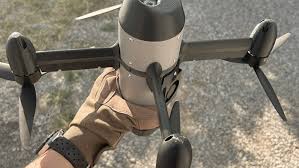
We've already seen early evidence of this across Eurasia, with Ukraine selling its interceptor drones to the highest bidder.
The Russia-Ukraine war accelerated the development of cheap one-way attack drones. Early in the war, missile interceptors used by Ukraine were too costly and drained the stockpiles of Western militaries at dangerous rates.
The proliferation of cheap interceptor drones levels the playing field and provides a low-cost solution against Russian-produced Geran and Iranian-designed Shahed attack drones.
Ukraine's interceptor drones are emerging as a cheap solution, costing roughly $1,000 to $3,000 each versus about $4 million for a Patriot missile used to down $20,000 Shahed drones. In the economics of war, this mismatch matters because missile use, especially in the U.S.-Iran conflict, has already outstripped the U.S.' annual production capacity.
Ukrainian President Volodymyr Zelensky has previously stated that Ukraine can produce at least 2,000 interceptors per day and could double that with more investment, supplying another 1,000 daily to allies.
This comes as Zelensky has emerged as a "Lord of War," with Ukraine pitching its highly developed, low-cost drones and robotic warfare technology to the highest bidder.
According to war blog UNITED24 Media, these are the four main interceptors Ukraine is offering to its allies around the world:
P1-SUN, by Skyfall
The most publicized yet is the P1-SUN, a Ukrainian play on words referring to its phallic bullet shape.
Created by SkyFall, it's a high-speed drone designed to take off vertically. At a speed of between 300 km/h, typical, and 450 km/h for its upper estimate, it's one of the fastest drones on the market, able to take out the most common models of Shahed-136 that cruise at roughly 185 km/ hour.
However, the new jet-powered Shahed-238, which can reach up to 550-600 km/h, can prove much more difficult to stop in the long run. The P1-SUN can reach an altitude of up to 5 kilometers. It is also guided by a pilot and has optional AI-assisted targeting.
The drone costs roughly $1,000 to produce and can carry a small modular charge, depending on the needs and the target. The company estimated it could manufacture up to 50,000 interceptor drones a month and export 5,000 to 10,000 without hampering local needs, Reuters reported.
As of March, SkyFall appears to be the clearest large-scale commercial player, described by Reuters as a major drone maker, with the P1-SUN interceptor among the main anti-Shahed systems now drawing foreign demand.