










Breaking News
 SHAMELESS AND DERANGED: Far-Left College Student Mocks Brutally Assassinated...
 "We Have All The Cards": Trump Cancels Witkoff-Kushner Trip To Pakistan For Iran Talks
 US data centers to get power from Hyundai's 684MW energy system supply deal
 Why Americans Won't Revolt
Top Tech News
 Researchers Turn Car Battery Acid and Plastic Waste into Clean Hydrogen and New Plastic
 'Spin-flip' system pushes solar cell energy conversion efficiency past 100%
 A Startup Has Been Quietly Pitching Cloned Human Bodies to Transfer Your Brain Into
 DEYE 215kWh LiFePO4 + 125,000W Inverter + 200,000W MPPT = Run A Factory Offgrid!!
 China's Unitree Unveils Robot With "Human-Like Physique" That Can Outrun Most People
 This $200 Black Shaft Air Conditions Your Home For Free Forever -- Why Is It Banned in the U.S.?
 Engineers have developed a material capable of self-repairing more than 1,000 times,...
 They bypassed the eye entirely.
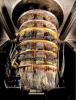 The Most Dangerous Race on Earth Isn't Nuclear - It's Quantum.
 This Plasma Stove Cooks Hotter Than The Sun


Interview: The avionics suite designed to let anyone fly a plane
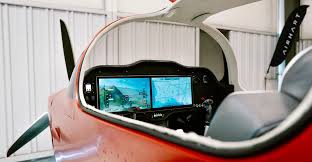
The test flights carried out on April 12, 2026 focused on the company's Airhart Sling, which is a heavily modified South African Sling TSi that had been gutted and the interior and control systems replaced.
The objective is to create a new avionics suite that could "democratize" flying small private planes by making the controls safer, more intuitive, and much simpler. This would be achieved by making the flying experience less like an airplane and more like an automobile, including replacing mechanical control linkages with fly-by-wire systems, even removing the traditional rudder pedals.
To learn more about the technology behind this, we reached out to Airhart President Nate Thuli, an aerospace executive with extensive experience in defense modernization.
Thank you so very much for taking time out of your day for this interview. How did your test flights go?
They went great. The system did exactly what we were hoping. As always with test flights, we learned more. One thing we discovered is that when the panel is out in the sun, it is super bright and visible, which is great, but the metal bezel was heating up. You don't even notice until you're out in that greenhouse environment. It never got too hot to touch, but we call that a successful pivot because we are going to apply a new coating that will keep the heat down. That is all part of the process – learning about the real environment.
Those are the things you don't realize. Heat is a big problem. I was just looking over the memoirs of a Concorde test pilot. Because of the heat, the Concorde used to expand, and an engineer's hat once got caught in a crack that closed up when the aircraft cooled down on the ground.
That is exactly the type of thing you wouldn't think of in a wind tunnel or during static testing. It only comes up in a dynamic environment. Thankfully, our anti-glare coating worked perfectly. When we built the panel, we went with the highest nit brightness of any panel in general aviation, so it's very easy to see. The lesson learned was simply the need to refine the coating on the metal bezel.
The most interesting part was the data. The system generates a tremendous amount of data, and we spent hours reviewing the computational work the plane was doing. The biggest success was seeing how well the system communicated across different tasks. It's the "nuts and bolts" that make it high-performing. We have a few refinements to make on fit and finish, but we are moving forward with the given specifications.