










Breaking News
 The Justice Department Indicts the Ministry of Love
 Is Surveillance Pricing Ripping You Off? How to Stop Your Data from Being Used Against You
 7 Things I Wish I Knew Before Buying a Freeze Dryer
 The Real Reason China Just Banned Companies From Firing Workers To Replace Them With AI
Top Tech News
 Robot Dives 1.5 Miles, Maps French Shipwreck With 86,000 Images And Recovers Artifacts
 Brain-inspired chip could reduce AI energy use by 70%
 CANCER HAS BEEN CURED
 "This is the first synthetic species," microbiologist J. Craig Venter told 60 Minutes'
 Humanoid robots are hitting the factories at an increasing pace
 Microsoft's $400 Billion Mistake Is Now a $200 Phone With Zero Tracking
 Turn Sand to Stone With Vinegar. Stronger Than Steel. Hidden Since 1627
 This is a bioprinter printing with living human cells in real time
 The remarkable initiative is called The Uncensored Library,...
 Researcher wins 1 bitcoin bounty for 'largest quantum attack' on underlying tech



The Justice Department Indicts the Ministry of Love
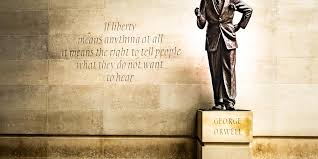
There is now an entire sector of "experts" dedicated to eradicating hate, and it seems they are now concerned that there may not be enough hate to sustain their hate-finding activities.
Leading the Thought Police in the fight against hate is the Southern Poverty Law Center (SPLC), a multimillion-dollar Orwellian Ministry of Love. In Orwell's 1984, he writes that, "The Ministry of Love was the really frightening one." It is the arm of the party machine charged with designating who is guilty of Hate and forcing them to confess their thoughtcrimes.
Although many were highly amused by the fact that SPLC has been indicted for paying people millions of dollars to organize hate activities, and many hilarious memes were doing the rounds making fun of them, it is no joke to end up on the SPLC Hate List. The Hate List is widely disseminated in the public sector as well as the corporate and non-profit world, and anyone who ends up on the Hate List is likely to suffer real world consequences. That, after all, is the whole point of identifying those guilty of hate—to punish them and ultimately to eradicate them from society.
SPLC recently came to public attention when they put Charlie Kirk on their Hate List just before he was assassinated. They are now back in the limelight after the Justice Department charged them with eleven counts of wire fraud, bank fraud, and money laundering. As explained by NYT,
The indictment focused on the law center's past use of paid informants to infiltrate far-right groups. Todd Blanche, the acting attorney general, accused the group of "manufacturing racism to justify its existence."
In his book Making Hate Pay, Tyler O'Neil explains that the SPLC "bankrupted many KKK groups, but it now needed a new host of current villains. In one case, the SPLC tried to create a blacklist to attack pro-life groups. The eventual 'hate group' list essentially manufactured hate, listing defunct organizations that extremism experts say didn't exist."
SPLCs defense to the grand jury indictment is, essentially, that they did nothing wrong as they were paying anonymous informants millions of dollars in an effort to infiltrate hate groups with a view to dismantling them. They argue that for the safety of their informants they had to mask the nature and purpose of the financial transactions, and they remind their critics that they share all their hate data with the police, the FBI, and the Justice Department. They see themselves as vital support for law enforcement.
This is not an unreasonable argument, given that the Justice Department does indeed encourage people to report hate, saying on its website that:
It is critical to report hate crimes not only to show support and get help for victims, but also to send a clear message that the community will not tolerate these kinds of crimes. Reporting hate crimes allows communities and law enforcement to fully understand the scope of the problem in a community and put resources toward preventing and addressing attacks based on bias and hate.