










Breaking News
 Elon Musk's SpaceX Will Help Power Anthropic's Claude in Surprise AI Deal
 Trump Brothers: Profiting from War
 Al Gore Warns of Impending Global… Cooling!
 WATCH: Alex Jones Tells Eric Bolling Exactly Why And How He's Fighting Back After Infowars...
Top Tech News
 Wow. Researchers just built an AI that can control your body...
 Google Chrome silently installs a 4 GB AI model on your device without consent
 The $5 Battery That Never Dies - Edison Buried This 100 Years Ago
 That is not a real fish. IT'S A ROBOT.
 Scientists Unveil Hemp Alternative to Plastic That Can Withstand Boiling Water...
 A Robot Economy: Who Gets Rich, Who Gets Left Behind
 Is Surveillance Pricing Ripping You Off? How to Stop Your Data from Being Used Against You
 Robot Dives 1.5 Miles, Maps French Shipwreck With 86,000 Images And Recovers Artifacts
 Brain-inspired chip could reduce AI energy use by 70%
 CANCER HAS BEEN CURED


The Dollar Is on the Brink
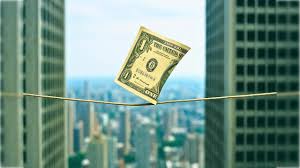
He warns listeners that the U.S. faces deeper trouble than most realize and that the fallout could touch everything from stocks to sovereign credit and the value of the dollar.
He moves through markets—equities, bonds, Bitcoin, and gold—arguing that policy mistakes and excessive monetary expansion set the stage for a major repricing of risk.
He opens by framing the overall threat to the U.S. financial system and currency, and how that risk translates into overvalued stocks and fragile market psychology:
The U.S. economy is in a lot of trouble, much more than is generally perceived. I think we're on the verge of not just a financial crisis, but a U.S. dollar and sovereign debt crisis. So I think U.S. stocks, which are extremely expensive by any conventional way to measure stock value, even the bulls will concede that they're expensive. They just expect them to stay expensive. But there's a lot of risk that when you're priced for perfection, you're not going to get it, and the markets are going to be repriced.
Next he turns to fixed income and offers a clear prescription for conservative capital allocation, explaining why Treasuries and corporate bonds look unattractive to him in the current environment:
I'd have no exposure to U.S. bonds. I can't think of any rational basis why a long-term investor would want to own any Treasuries or corporate bonds. The yields are just much too low to offset the risk, either of default or inflation. So if you want to be in bonds, I would look overseas.
Peter then critiques the makeup of recent crypto demand, arguing that the buyers are mostly retail while institutional selling has quietly shifted risk elsewhere—an unhealthy market dynamic in his view that weakens Bitcoin's price foundation and brings crypto proponent Michael Saylor's claims into doubt:
So that tells me that the smart money has spent the last year selling and the Bitcoin has been accumulated by retail investors, by small mom and pops, by ETF buyers. You know, this is a very unhealthy market. I think the whole story behind Bitcoin has broke. In fact, look at what Saylor has to do now when a year ago he was able to sell 0 percent preferred 0 percent interest because people really wanted exposure to Bitcoin. He can't do that anymore because they don't want the exposure to Bitcoin.