










Breaking News
 Saudi Arabia Vs UAE
 Trump Mulls Restart Of 'Project Freedom' As Gulf States Lift Military Curbs, Iran Reiterates
 Tucker & Thomas Massie on the Epstein Coverup and Israel's Influence on American Politics
 Trump Again Negotiates by Demanding Unconditional Surrender, TACO or War?
Top Tech News
 Wow. Researchers just built an AI that can control your body...
 Google Chrome silently installs a 4 GB AI model on your device without consent
 The $5 Battery That Never Dies - Edison Buried This 100 Years Ago
 That is not a real fish. IT'S A ROBOT.
 Scientists Unveil Hemp Alternative to Plastic That Can Withstand Boiling Water...
 A Robot Economy: Who Gets Rich, Who Gets Left Behind
 Is Surveillance Pricing Ripping You Off? How to Stop Your Data from Being Used Against You
 Robot Dives 1.5 Miles, Maps French Shipwreck With 86,000 Images And Recovers Artifacts
 Brain-inspired chip could reduce AI energy use by 70%
 CANCER HAS BEEN CURED


The Comey Indictment and Free Speech
The Supreme Court employed a particularly narrow approach during much of the last century, through two world wars and then the Red Scare in the 1950s.
Thankfully, in the 1960s, the Warren Court began a remarkable and thus far unimpeded march toward compelling the government to tolerate open, wide, caustic and even threatening speech.
When crafting the First Amendment with its iconic speech clause — "Congress shall make no law … abridging the freedom of speech" — James Madison insisted that the word "the" precede the word "freedom" so as to make clear the understanding of the drafters and ratifiers that the freedom of speech existed before the government did. This presumption — that speech is pre-political — has a theoretical and a practical application.
Madison's theoretical application, shared by Thomas Jefferson and articulated by him in the Declaration of Independence — that our rights are endowed within us by our Creator — is that free speech is inherent in our human nature. Hence, it is a natural right that all persons have irrespective of the place or time of their births — or the government's wishes.
The practical application is that free speech is vital to popular government. If people fear expressing opinions that might antagonize the government, they will hesitate to speak freely; and then debate over matters of public importance will be minimized rather than be a part of robust deliberative processes out of which many ideas are sifted and challenged.
When the government threatens to punish speech, the threat harms not only the person charged, but it also chills the expressive rights of others. It gives others pause before articulating an opinion that might offend those in power. In recent years, the federal courts have criticized chilling by the government, deferring instead to the open marketplace of ideas.
Speech should rise or fall — be influential or ignored — based on its ability to be accepted in the marketplace of ideas, not on whether it pleases the government.
Until now.
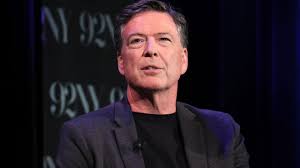
Now, the Trump Department of Justice has persuaded a grand jury in North Carolina to indict James Comey, the former federal prosecutor, DoJ official and FBI director, for posting on Instagram a photo of a configuration of sea shells on a beach that someone else had crafted displaying the numbers 8647.
The government's theory of its case is that the 47 refers to the 47th president of the United States, Donald Trump, and the 86 offers to kill him. Having worked in restaurants in my youth, I recall the use of 86 in restaurant jargon. There, it means that whatever item is articulated with the 86 is no longer available for offering to patrons. "Espresso is 86ed!"
The DoJ apparently persuaded the grand jurors that on a beach and coming from Comey, 86 expressed both a wish and an intent to kill Trump.
But the Comey posting was last year. That indicates that the DoJ itself did not take it as a serious threat. Secret Service agents — not the DoJ or FBI — interviewed Comey via a phone call, and he satisfied them that he had no intent to harm anyone, least of all the president.