










Breaking News
 They Got $225 MILLION... But ONLY Fixed 8 Homes?! (Helene Recovery Scandal)
 The TRUTH About The Economy Was Just Revealed
 NVIDIA, homebuilder PulteGroup, and startup Span are partnering to install mini AI data centers...
 CDC SUED FOR OPERATING ILLEGAL & UNCONSTITUTIONAL 72-DOSE CHILDHOOD VACCINATION PROGRAM
Top Tech News
 Wow. Researchers just built an AI that can control your body...
 Google Chrome silently installs a 4 GB AI model on your device without consent
 The $5 Battery That Never Dies - Edison Buried This 100 Years Ago
 That is not a real fish. IT'S A ROBOT.
 Scientists Unveil Hemp Alternative to Plastic That Can Withstand Boiling Water...
 A Robot Economy: Who Gets Rich, Who Gets Left Behind
 Is Surveillance Pricing Ripping You Off? How to Stop Your Data from Being Used Against You
 Robot Dives 1.5 Miles, Maps French Shipwreck With 86,000 Images And Recovers Artifacts
 Brain-inspired chip could reduce AI energy use by 70%
 CANCER HAS BEEN CURED


The Renaissance Path: A radical blueprint for self-reliance in a broken system
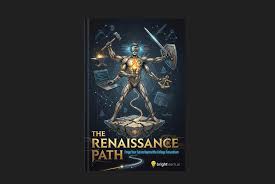
This book is not just a rejection of modern academia—it's a roadmap for reclaiming sovereignty over one's life, skills and legacy.
The book wastes no time dismantling the illusion of higher education. With brutal clarity, it exposes how universities have become debt factories, churning out degrees that hold little real-world value while leaving graduates financially crippled. The numbers don't lie:
40% of college graduates are underemployed, working jobs that don't require their degrees.
Tradesmen and self-taught entrepreneurs often out-earn degreed peers by age 25, without the burden of student loans.
Tech giants like Google and IBM have dropped degree requirements, proving credentials ? competence.
The indictment goes deeper, revealing how colleges delay adulthood by fostering learned helplessness—outsourcing basic life skills (meal prep, conflict resolution) while indoctrinating students with ideological dogma. Male enrollment has plummeted as campuses increasingly pathologize traditional masculinity, replacing self-reliance with victimhood.
The Renaissance alternative: BE-DO-HAVE
Rather than climbing someone else's ladder, "The Renaissance Path" advocates for building your own. The core philosophy? Be-Do-Have:
Be – Cultivate identity through virtues such as discipline, courage and integrity.
Do – Prioritize action over theory. Skills > diplomas.
Have – Own assets (land, tools, businesses) instead of liabilities (debt, dependencies).
This framework flips the script on consumerist conditioning ("Have-Do-Be"), emphasizing self-mastery over institutional validation. Historical polymaths—Da Vinci, Franklin, Tesla—weren't products of classrooms but of relentless curiosity and hands-on experience.
One of the book's most powerful sections dissects how society implants "borrowed desires"—goals that serve systems rather than individuals. The corporate 9-to-5, the McMansion mortgage, the endless chase for credentials—these are traps.
The antidote? Define success on your terms. The book profiles homesteaders, tradesmen and digital nomads who rejected the script, achieving financial independence through self-directed learning and entrepreneurship.