










Breaking News
 Ukrainian Drone Strike Paralyzes Airports Across All Southern Russia
 Trump Administration Drops First Batch Of UAP/UFO Files
 They tried to bury this...
 Gold, Debt And The Inevitable Global Housing Market Crash
Top Tech News
 Wow. Researchers just built an AI that can control your body...
 Google Chrome silently installs a 4 GB AI model on your device without consent
 The $5 Battery That Never Dies - Edison Buried This 100 Years Ago
 That is not a real fish. IT'S A ROBOT.
 Scientists Unveil Hemp Alternative to Plastic That Can Withstand Boiling Water...
 A Robot Economy: Who Gets Rich, Who Gets Left Behind
 Is Surveillance Pricing Ripping You Off? How to Stop Your Data from Being Used Against You
 Robot Dives 1.5 Miles, Maps French Shipwreck With 86,000 Images And Recovers Artifacts
 Brain-inspired chip could reduce AI energy use by 70%
 CANCER HAS BEEN CURED


Trump claiming Iran war 'win' – here's the reality
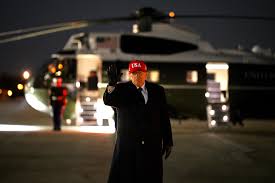
Two months into the war in Iran, the reasons the US gave for launching this conflict – and Washington's minimum criteria for claiming success – now appear unintelligible. So much so that US officials are now arguing the war had actually ended in America's favor almost a month ago, when the ceasefire came into effect.
It is hard to think of a more damning indictment of Donald Trump's catastrophic war in Iran than the spectacle of his secretary of state, Marco Rubio, telling reporters on May 5 that the main goal now was to get the Strait of Hormuz "back to the way it was: anyone can use it, no mines in the water, nobody paying tolls."
This, he argued, was an entirely separate defensive and humanitarian operation and would only become a war if US ships came under fire – which they in fact did that same day. Rubio ignored the obvious contradiction that the humanitarian operation had been necessitated by the very war he was simultaneously presenting as already won.
Things took an even more absurd turn later that day. Trump announced he was suspending "Project Freedom", his plan for the US Navy to escort tankers out of the strait, after just one day. The US president cited "great progress" toward an agreement with Iran. As has happened several times now, global stock markets rallied before falling back again.
While few doubt Trump is desperate to put this disastrous war behind him, particularly before heading to Beijing on May 14, he massively oversold the impression of a breakthrough. The Iranians were merely considering a 14-point proposal for 30 days of negotiations aimed at finding a durable end to the war.
The more convincing reason Trump abandoned Project Freedom is that it was already clear it would not solve the crisis. Most owners of the 1,500 ships currently stranded behind the strait were unwilling to risk passage even with a naval escort. Iran's response, attacking shipping and launching missiles at the United Arab Emirates, also threatened the ceasefire itself.
Washington's problem is that the Iranians will probably insist talks can only begin, and the Strait of Hormuz reopen, if Trump agrees to end the economic blockade of Iranian maritime trade. The US blockade is inflicting serious damage on the Iranian economy.
Apart from anything else, Iranian officials see ending the blockade as logical reciprocity. But they also understand time is running out before the closure of the strait causes lasting structural damage to the global economy – if it has not already. This gives them enhanced leverage at the moment.
Yet even if negotiations begin, the same problem that prevented a deal before the war remains. Trump lacks the detailed and institutionalized policy apparatus of his predecessor, Barack Obama, whose 2015 nuclear agreement with Iran the current US president so desperately wants to outdo.