










Breaking News
 Diesel Crisis Update: Farmers Hit Hard; Food Crisis Warnings Rise
 The Scientist Who Scans Fathers' Brains: The Parenting Checklist You NEED Before You...
 WARNING: This New Flu Shot Can ACCELERATE Aging
 What Do Cryptos and Silver NOT Have in Common $$$
Top Tech News
 Singapore is experimenting with biological computing using living human neurons...
 It's Happening - Europe is Building an Impossible Fusion Reactor
 Portable 1MW Kaleidos Microreactor Secures Critical Nuclear Fuel Deal Through 2030s
 This New All-In-One Range Extender Is Ready To Go Into Any Electric Truck
 Aptera Reveals The Secret To Building Its Solar EV: China
 High-voltage sodium home battery emerges as affordable rooftop solar solution
 Peter Thiel-Funded Company Anduril to Triple the Number of Autonomous Surveillance...
 China has released Origin Pilot, claimed to be the world's first open-source operating system...
 ShieldAI XBAT Drone Fighters Can Give A Fighter Drone Wing to Every US Destroyer
 Brain organoids, kept alive more than five years, matured like human brains



With One Strike, Netanyahu Tries To Kill Two Peace Deals
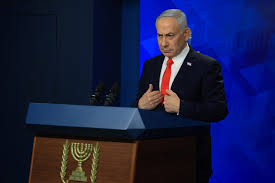
It's important to understand that, contrary to Donald Trump's quip to Barak Ravid that Netanyahu has "no f***ing judgment," the Israeli Prime Minister knows exactly what he is doing: With a set of strikes at the Dahiyeh neighborhood in Beirut, he is trying to kill both the pending US-Iran peace deal and the fragile peace between Israel and Lebanon that would come with it.
There is a further strategic dividend. Netanyahu is also seeking to preempt Iran's attempt to establish a new regional deterrence equation – one in which attacks on Beirut, and potentially on Lebanon more broadly, would trigger a direct Iranian response against Israel. By striking now, he is not merely targeting an adversary; he is challenging the emergence of a regional order that would constrain Israel's freedom of military action.
Netanyahu even posted a video on his Twitter bragging about the attack:
????? ??????? ??????? ????? ???? ?? ????? ????? ????????. ????? ?? ????? ??? ????? pic.twitter.com/wVARFCkDQe
— Benjamin Netanyahu - ?????? ?????? (@netanyahu) June 14, 2026
The exchange of fire between Israel and Iran last week was about far more than retaliation. After Israel defied President Trump and struck Beirut's Dahiyeh neighborhood, Iran responded by attacking Israel directly – the first time Tehran had launched strikes on Israel in response to an Israeli attack on Lebanon. Israel defied Trump once more and retaliated against Iran, prompting another Iranian response, after which Israel confined its next strike to southern Lebanon rather than Beirut.
The cycle reflected Iran's attempt to establish a new regional equation: that attacks on Lebanon would no longer be cost-free for Israel, but would carry the risk of direct Iranian retaliation. For the first time in decades, a major regional power was seeking to place hard-power constraints on Israel's freedom of military action beyond its borders.
Having reestablished its own deterrence, Tehran was now attempting to establish extended deterrence to its partners as part of a broader effort to rebuild its forward-defense posture. Israel, unsurprisingly, viewed this as a direct challenge to its long-standing freedom of maneuver and moved quickly to prevent the new doctrine from taking hold.