










Breaking News
 Alex Jones Live: As California Burns, Newsom Stands Down Again!
 Susie Wiles Reportedly Orchestrated Zacharia's Firing With Hannity Hit
 The Biggest Winners And Losers From The Petrodollar's Decline
 US Quietly Shifts MQ-9 Reapers Into South America
Top Tech News
 Bioinspired robot airdrops into remote waters via morphing wing-sail
 Anduril interceptor adapts to emerging threats via swappable stages
 I Built a Website to Expose Solar and Battery Scams
 Whistleblower Issues Dire Warning: Rogue AI, Hacking Nuclear Programs...
 Multi-material insulation delivers up to 10,000 x the stiffness
 Anduril's plan to save US sub edge from China's undersea surge
 Researchers Develop AI 'Mind-Reading' Tool That Reconstructs What Your Eyes See
 Video: Dexterous robot hand learns the delicate art of silk embroidery
 The computer that can read your mind:
  Seven apps. One craft


Your brain doesn't peak in your 20s after all: Study reveals your mind is at its sharpest betwee
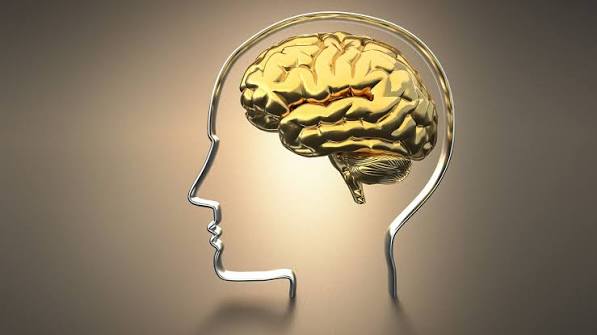
Many people assume they've already reached their peak by the time they hit 30 – but new research suggests the opposite is true.
Scientists have discovered that humans don't reach their highest levels of psychological functioning until between the ages of 55 and 60.
This is because decades of accumulated knowledge, emotional maturity and life experience outweigh the decline in raw mental speed, the researchers said.
And it suggests that middle age represents the 'true apex of psychological readiness'.
The study, published in the journal Intelligence, reads: 'Fluid intelligence, which peaks near age 20 and declines materially across adulthood, is often regarded as the most critical cognitive ability for predicting important life outcomes.
'Yet, human achievement in domains such as career success tends to peak much later, typically between the ages of 55 and 60.
'These findings suggest that functional capacity, defined in terms of key differential psychological traits, may peak in late midlife, closely aligning with the typical peak in career achievement.
'Overall, cognitive-personality functioning peaks between ages 55 and 60.'
For their study, a team from the University of Western Australia carried out a large review of major published research that had already measured how different psychological abilities change with age.
They selected nine broad areas they believed contribute to real-world success including reasoning ability, vocabulary, knowledge, working memory and processing speed.
They also included major personality traits, giving particular importance to conscientiousness – being organised, reliable and disciplined – and emotional stability, such as being able to remain calm under pressure.
For their analysis they combined all of these traits into one overall score called the Cognitive-Personality Functioning Index.
Overall, they found some abilities that began to decline from the 20s onwards, such as processing speed and working memory.
However, some were found to improve with age, including vocabulary, financial literacy, emotional intelligence, conscientiousness and emotional stability.
When all abilities were combined, they found psychological functioning peaked between the ages of 55 and 60.
Famous faces that arguably reached their 'peak' during this timeframe include Boris Johnson, who became Prime Minister at the age of 55, CRISPR scientist Jennifer Doudna who won a Nobel prize at 56, and Liam Neeson, who starred in hit film Taken at the age of 56.