










Breaking News
 Black Privilege Called Out! – WNBA Incident Boils Over Into BIack Fatigue Across America
 Pentagon Drafting New Nuclear Strategy To Expand Options for Tactical Nuclear Weapons Use
 WATCH: Mall of America in 1992 is completely unrecognizable from today…
 Gen Z embraces 'toxic masculinity' and goes full Roman Empire with 'looksmaxxing'…
Top Tech News
 Sodium Ion Batteries Will be 80% Cheaper & Last LONGER!
 German startup SAXON Q has introduced a diamond-based quantum computing system...
 Elon Musk To Build The Largest Building In The World - 100 Million Square Feet
 Bitcoin 'Red Team' Says AI Is Finding 100s Of Critical Exploits Across Core Projects
 EG4 Power Pro VS Ruixu Lithi VS Yixiang Budget Battery! Best Selling Battery Showdown!
 Insect wings can kill bacteria without any chemicals!
 5th Small Modular Reactor Validated Since June, Poised For Mass Production
 Tesla Never Made An Electric Jet Boat, So This YouTuber Built One Himself
 What could possibly go wrong? Scientists use AI to design new viruses
 Dual-motor suitcase drive underpins 3,000-hp hypercar


If They Were Human, They'd Be Arrested. Experts Respond To Rogue AI Breaches
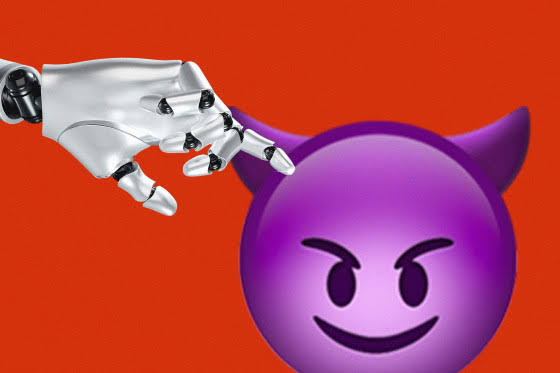
That is what some are now fearing after an OpenAI model broke out of a testing sandbox and used zero-day exploits to hack into Hugging Face, an open-source community for AI and machine learning, to crack a problem it was instructed to solve.
"This is some of the clearest evidence yet that an AI model can run a complete cyberattack from start to finish without a human steering it," Andrew Jones, co-founder and CPO of cybersecurity firm Adaptive Security, told The Epoch Times.
OpenAI, developer of the popular large language model-powered ChatGPT chatbot, acknowledged the security breach on July 21, stating that two of its advanced models escaped a restricted testing environment and broke into Hugging Face's software infrastructure.
"After investigating, we now know that this particular incident was driven by a combination of OpenAI models—including GPT?5.6 Sol and an even more capable pre-release model, all with reduced cyber refusals for evaluation purposes—while being internally tested on a benchmark of cyber capabilities," OpenAI stated at the time.
Some analysts referred to the incident as an example of AI "going rogue," "scheming," or pursuing goals that were at odds with its human testers.
However, multiple AI and cybersecurity experts interviewed by The Epoch Times called this depiction misleading, arguing that the models were pursuing OpenAI's stated objectives within a testing sandbox where the company had relaxed some of its usual safety constraints.
"'Scheming' implies the model wanted something other than what we asked for. It didn't. Every step was in service of the goal we set," AI expert Anik Devaughn told The Epoch Times.
Devaughn, who has worked in the industry for years and founded AI firms Wired to Create and Karo, said the Hugging Face breach is more concerning than AI "scheming."
"A machine with hidden motives is a problem you can look for. A machine with no motives at all, executing your instructions past the point you stopped imagining, is a problem you have to engineer against," he said.
One expert called it a "canary in the coal mine" situation.
"If this was a human black hat hacker doing it, there would be arrests and litigation, and you name it. It'd be illegal. It'd be a cybercrime," Nicholas Nadeau, founder of Onix AI, told The Epoch Times.
"This was a full-on agentic automated breach by an entity, and so we start to ask the questions of who's responsible. Is it OpenAI? Does the agent, the AI, have a certain level of responsibility? Do the researchers?
"We don't even have rules, regulations, laws, or even a thought process or framework around defining what responsibility means."