










Breaking News
 Germany To Join French Nuclear Exercise, Deepening 'Counter-Russia' Deterrence
 Social Media Influencers Andrew And Tristan Tate Arrested In Miami
 Mamdani's New York: West Side Homeless Camp Stretching 12 Blocks Now Allegedly Stealing...
 White DSA Member Inadvertently Exposes Socialist Playbook: "Secret Nazis"...
Top Tech News
 Anthropic is launching its own drug discovery programs for rare diseases using Claude...
 SpaceX AI Satellites Will Have 250 Kilowatts of Power
 Chinese researchers have developed a sodium-metal battery that can fully charge in just 4 minutes...
 SpaceX Starship Flight 13 in 3 Days - Thursday July 13
 Chinese Scientists Develop Nuclear Battery Using Carbon-14
 Teleoperated humanoid robots complete first-ever live surgery
 Floating capsule auto-disinfects water without chemicals or battery
 Modular Reactors To Solve Data Center Hysteria?
 DeepSeek Developing In-House AI Chip In Bid To Cut Nvidia Reliance
 America just took three brand-new nuclear reactors critical in thirty days, a first for any...



Second Circuit Upholds New York Vaccine Mandate Against the Amish
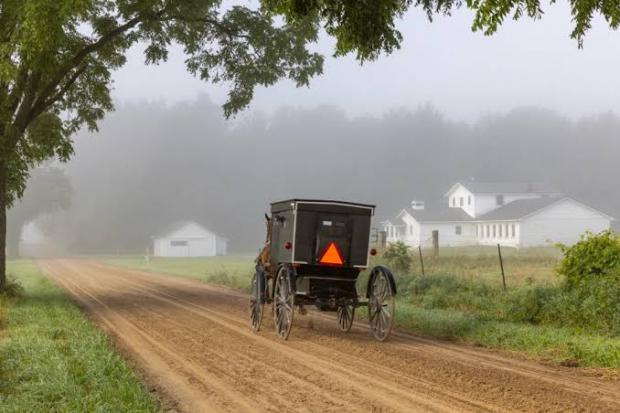
In Miller v. McDonald, the U.S. Court of Appeals for the Second Circuit ruled that the state's elimination of religious exemptions does not violate the First Amendment-protected rights of Amish parents and private schools. The decision imposes significant fines for noncompliance.
The Genesis
The case stems from New York's 2019 repeal of religious exemptions during measles outbreaks. Three Amish schools and parents, facing more than $118,000 in combined fines, argued that mandatory vaccination conflicts with their faith's emphasis on separation from the modern world, Divine Providence, and moral objections tied to vaccine development (e.g., the use of aborted fetal tissue). They invoked Wisconsin v. Yoder (1972), which protected Amish educational autonomy, and claimed the policy targeted religious practice. However, the Second Circuit upheld the mandate with the precedent of Employment Division v. Smith, a 1990 U.S. Supreme Court (SCOTUS) ruling that the government generally does not have to provide religious exemptions from a law if that law is neutral and applies equally to everyone, even if it incidentally burdens religious practices.
Should the case reach SCOTUS, as legal experts expect, the decision could have nationwide implications for religious exemptions in all 45 states that currently allow them for school vaccines.
Contrary to Ethical Healthcare
The controversy intersects directly with principles of biomedical ethics outlined by Tom Beauchamp and James Childress in Principles of Biomedical Ethics. The framework rests on four pillars: respect for autonomy, beneficence, nonmaleficence, and justice. Autonomy — respecting individuals' capacity for self-determination and informed choice — holds priority. Forcible or heavily coercive vaccination policies abrogate this by overriding sincere conscientious refusals, treating communities as means to public health ends rather than autonomous moral agents.
True ethical public health favors accommodation and least-restrictive alternatives over compulsion. Supporters of the ruling counter that school attendance creates a compelling state interest in preventing outbreaks, and uniform rules prevent free-rider problems.
Insulated Communities Pose Minimal Risk
The Amish plaintiffs in Miller v. McDonald are not seeking special treatment. They are asking to be left alone — to live in private, self-sufficient, rural communities, educating their children in isolated, Amish-only schools, as they have for more than 200 years. The measles outbreak New York cited in justifying its 2019 exemption repeal occurred primarily in an Orthodox Jewish community in Rockland County, not among the Amish. The Amish community poses, by any reasonable epidemiological assessment, minimal public health risk from within its insular, geographically separated communities.
Attorney Greg Glaser, general counsel for Physicians for Informed Consent, responded to the ruling: "Informed consent and informed refusal are the bedrock of medical ethics. Banning religious exemptions effectively legalizes medical bullying by proxy, forcing families to forfeit their children's education if they choose to exercise informed refusal."