










Breaking News
 JUST IN: House Passes Continuing Resolution to Fund Government Until December 4
 HORROR IN ARIZONA: Whistleblower Says Native Americans Were Drugged...
 BritCard Is Dead: Burnham Kills Starmer's £1.8 Billion Digital ID To Pay For An Energy Tax Cut
 Trump Vows US Will Destroy A Bridge Or Power Plant For Each Iranian Attack On Shipping
Top Tech News
 Anthropic is launching its own drug discovery programs for rare diseases using Claude...
 SpaceX AI Satellites Will Have 250 Kilowatts of Power
 Chinese researchers have developed a sodium-metal battery that can fully charge in just 4 minutes...
 SpaceX Starship Flight 13 in 3 Days - Thursday July 13
 Chinese Scientists Develop Nuclear Battery Using Carbon-14
 Teleoperated humanoid robots complete first-ever live surgery
 Floating capsule auto-disinfects water without chemicals or battery
 Modular Reactors To Solve Data Center Hysteria?
 DeepSeek Developing In-House AI Chip In Bid To Cut Nvidia Reliance
 America just took three brand-new nuclear reactors critical in thirty days, a first for any...



Shipping Firms Offering Sailors Massive Bonuses To Risk Crossing Hormuz
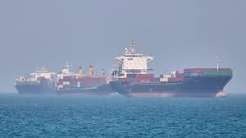
Sinokor Group, the world's largest owner of supertankers, offered its crews six months of extra salary to make a return voyage collecting oil from Saudi Arabia or Iraq and unloading it in the Gulf of Oman, a trip the company said would take around a month, according to a document seen by Bloomberg.
Captain Pradeep Chawla, chairman of GlobalMET, a seafarer training organization that partners with the International Maritime Organization (IMO), said crews are "being offered huge bonuses by some companies," without referring to the Sinokor offer directly.
He added that "We have heard stories of a large number of crew members getting off, but they are able to find people who are willing to go."
Since the start of the US war on Iran, at least 59 commercial ships have come under attack in and around the Persian Gulf, with 17 seafarers killed, according to the UN's shipping agency.
The cost of shipping has surged since attacks on commercial vessels drove traffic through the Strait of Hormuz to near collapse.
The heightened risk has driven up both insurance premiums and crew bonuses, yet many seafarers are still refusing the additional pay rather than risk the crossing.
The latest shipping data by Kpler shows that traffic through the Strait of Hormuz remains heavily suppressed, with only 30 verified crossings logged between July 17 and 19.
Reuters reported last week that shipping firms are steering clear of US-controlled shipping corridors through the Strait of Hormuz along Oman's coast, fearing Iranian strikes. The move follows a series of attacks on vessels bypassing the Islamic Republic's designated channels under the Iran–US memorandum of understanding (MoU).
One shipping source said the US appears to have no control over the situation, while Verisk Maplecroft analyst Torbjorn Solvedt warned that Iran's continued ability to hit ships on the Omani route makes US President Donald Trump's administration's plan to keep traffic moving unlikely to succeed.
In early July, three Thai sailors sued their former employer, Precious Shipping, along with two affiliates and the vessel's captain, accusing them of endangering their lives and dismissing them before their nine-month contracts ended, after a projectile struck their cargo ship in the Strait of Hormuz in March, killing three crew members.