










Breaking News
 IRS Threatens to Seize Tennessee Man's Farm Over Interest Charged on Accidental Refund...
 STIFFED BY THE OBAMAS: Plumbing Subcontractor Forced to Shut Down and Lay Off 25 Union...
 DIGITAL ID FOR TRADES: Mark Carney's SURVEILLANCE NET Closes In!!
 ARE THEY INSANE? Now War With CHINA and RUSSIA??
Top Tech News
 Anthropic is launching its own drug discovery programs for rare diseases using Claude...
 SpaceX AI Satellites Will Have 250 Kilowatts of Power
 Chinese researchers have developed a sodium-metal battery that can fully charge in just 4 minutes...
 SpaceX Starship Flight 13 in 3 Days - Thursday July 13
 Chinese Scientists Develop Nuclear Battery Using Carbon-14
 Teleoperated humanoid robots complete first-ever live surgery
 Floating capsule auto-disinfects water without chemicals or battery
 Modular Reactors To Solve Data Center Hysteria?
 DeepSeek Developing In-House AI Chip In Bid To Cut Nvidia Reliance
 America just took three brand-new nuclear reactors critical in thirty days, a first for any...



Behind America's Growing 'Food Freedom' Movement
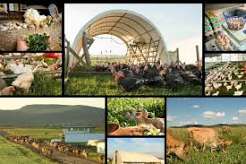
Salatin, who runs Polyface Farm in the hills of Virginia's Shenandoah Valley, is pitching the concept of a "Food Emancipation Proclamation."
Through what he envisions as a federal declaration, consenting adults would be allowed to buy and sell homemade and farmstead food directly, without the costly commercial infrastructure and cumbersome government regulation currently in place.
Salatin's mission reflects a push among homesteaders and independent farmers to cultivate local food networks, where food is grown and raised without chemicals and consumers can gain a more transparent connection to how food is produced.
The Next 15 Years
At its core, food emancipation and local food networks are about neighbors feeding neighbors, sidestepping a system many no longer trust.
Salatin told The Epoch Times that the American food system is at a historic inflection point. He points to an aging farm class; the average American farmer is now around 60 years old.
Around half of U.S. agricultural equity is expected to change hands in the next 15 years, he said.
"That's the most unprecedented peaceful transfer in modern history," he said.
In 2025, Americans spent 56.3 percent of their food dollars on items prepared outside the home, at restaurants, at fast-food chains, and through takeout delivery services. Overall, out-of-home food spending reached a record $1.41 trillion out of a total $2.51 trillion in national food spending, according to the U.S. Department of Agriculture (USDA).
Meanwhile, the farmer's share of the retail food dollar after production expenses has plummeted to roughly 5.8 cents today, according to the USDA. That figure was 40 cents in the mid-20th century.
The idea of food emancipation is simple: Let small producers legally and freely sell directly to the people who want their food.
Salatin notes that the real barrier to young people entering farming is not access to land alone, but the inability to profit from small-scale, value-added food production under existing rules.
He illustrates the gap with a simple calculation.
On a couple of acres, a farmer might raise 1,200 pastured chickens, selling them as whole birds or cut-up parts at an average of about $30 per bird, yielding $36,000 in gross income, he said.