










Breaking News
 Johnny Depp is the swashbuckling star they couldn't cancel! Eight years after Disney dropped...
 Hero father Kaylub Giamanco, who brought down Oregon school shooter, happened to be driving...
 Mount St Helens triggers aviation warnings after winds whip up old volcanic ash into the skies
 Netflix bosses 'freaking out' over poor test screenings for director Greta Gerwig's $280
Top Tech News
 I Built a Website to Expose Solar and Battery Scams
 Whistleblower Issues Dire Warning: Rogue AI, Hacking Nuclear Programs...
 Multi-material insulation delivers up to 10,000 x the stiffness
 Anduril's plan to save US sub edge from China's undersea surge
 Researchers Develop AI 'Mind-Reading' Tool That Reconstructs What Your Eyes See
 Video: Dexterous robot hand learns the delicate art of silk embroidery
 The computer that can read your mind:
 Seven apps. One craft
 SHOCK CASE REPORT: Advanced Alzheimer's Patient Regains Speech, Memory, Mobility...
 Most artificial limbs rely on silicone or plastic to mimic human hands.



Discovery of New Avocado Types Could Lead to More Superfood Choices and Resilience
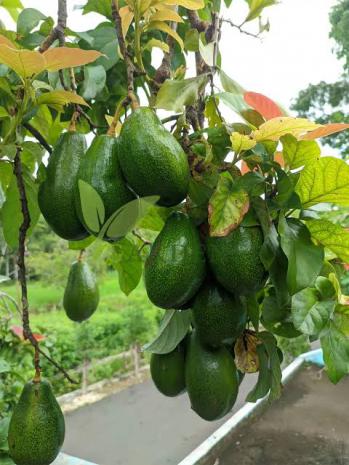
The fruit was first transported hundreds of miles to Central America from South America around 5,000 years ago, and the American researchers uncovered genetic traces of this ancient migration in the fruit's DNA.
They suggest some of these species could aid in supply chain diversification, and boost sustainable agriculture and commercial varieties of the healthfood fruit.
The natural range of avocado trees extends from Mexico to Peru, but study leader archaeobotanist Kevin Wann says there is "a much wider breadth of avocado diversity that science had not yet documented."
"We could potentially tap into this genetic diversity to conserve commercial avocado plants that are vulnerable to disease."
Key to their discovery and to this evolutionary diversity was the human-caused migration of the fruit from south to north. For more than 10,000 years, humans in the region have coveted the plant's fruit, whose yellowish-green flesh is packed with nutrients and fats.
As the seeds were dispersed throughout the humid lowlands of Central America, they hybridized with native plants, producing a diversity of avocado varieties.
Despite resembling the avocados found in humid regions such as Florida and the Caribbean, the local varieties are genetically distinct from the commercially-grown fruits found in guacamole.
As of 2024, 11 million metric tons of avocados were grown annually worldwide, but like the banana, the vast majority belong to a single variety: Hass. These large, long-lasting avocados are produced through clonal grafting, where a branch is taken off one Hass avocado tree and attached to another tree to bear the same exact fruit. As a result, most avocados in grocery stores are genetically indistinguishable.
That makes all Hass avocados vulnerable to the same threats, however, with a single disease or change in temperature or precipitation carrying the power to wipe out an entire population of Hass avocados.
Increasing the genetic diversity of avocados is crucial to protecting the multi-billion-dollar industry.
To that end, Wann, a doctoral student at Texas A&M University, examined DNA from avocado leaves collected in Nicaragua, Honduras, and southern Mexico. They also spoke with the farmers and gardeners to learn how they cultivate these local avocados.
Traditional agricultural practices have honed the region's native avocado varieties, also known as "landraces," for thousands of years. Locals confirmed that the lowland avocado landraces had not experienced root rot, the most common disease affecting commercial avocados.
The researchers extracted and analyzed DNA from 47 native avocado landraces, 32 of which came from Nicaragua. They then compared the DNA from the various landraces with previously published genetic data from more than 200 other avocado lineages.