










Breaking News
 Fragile Iran 'Pause' Shattered As US Base In Jordan Comes Under Attack, Oil Soars
 Clocks Forward, Clocks Back, the Idiocy Of It All
 The Huge Earthquake In Japan Is Another Example That Shows The Pacific Ring Of Fire...
 Hidden Consequences: The Iran Regional War Is About More Than Just Oil
Top Tech News
 Elon Vows AI-Made 'Odyssey' After Blasting Nolan's Take On Homer
 Anthropic is launching its own drug discovery programs for rare diseases using Claude...
 SpaceX AI Satellites Will Have 250 Kilowatts of Power
 Chinese researchers have developed a sodium-metal battery that can fully charge in just 4 minutes...
 SpaceX Starship Flight 13 in 3 Days - Thursday July 13
 Chinese Scientists Develop Nuclear Battery Using Carbon-14
 Teleoperated humanoid robots complete first-ever live surgery
 Floating capsule auto-disinfects water without chemicals or battery
 Modular Reactors To Solve Data Center Hysteria?
 DeepSeek Developing In-House AI Chip In Bid To Cut Nvidia Reliance



The Fed's Policy of Price Stability Helps Create an Unstable Economy
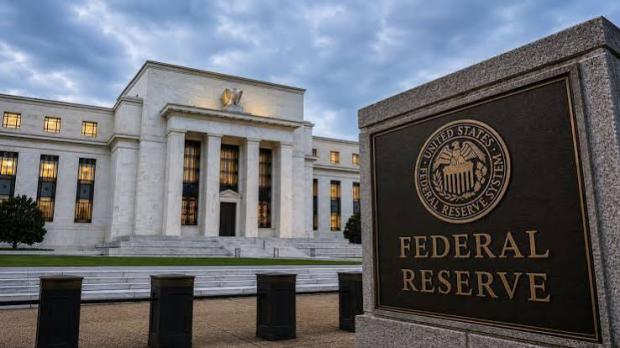
Price stability is an economic condition where the general price level of goods remains relatively constant over time. It is held that a stable price level leads to the efficient use of the economy's scarce resources. According to the former President of the Federal Reserve Bank of New York William J. McDonough,
Over the long run, price stability is the one sustainable contribution monetary policy can make to growth. This applies to all countries.
Now, changes in the consumer demand for goods are mirrored by changes in the relative prices of goods. Thus, an increase in the demand for potatoes versus tomatoes is likely to increase the price of potatoes relative to tomatoes. Businesses, if they want to be successful (i.e., to be profitable) are likely to increase the supply of potatoes versus the supply of tomatoes.
As long as inflation—which is often misdefined by popular economics as increases in the price level—is stable and predictable, businesses can identify changes in relative prices and thus maintain the efficient allocation of resources. Businesses will respond to signals issued by consumers through changes in relative prices.
For instance, let us say that the average price level stands at 100. It is observed that the price of potatoes has increased by two percent while the price of tomatoes remains unchanged. Given an unchanged price level, businesses could establish that there is a high likelihood of an increase in demand for potatoes versus tomatoes. Consequently, businesses will increase the supply of potatoes.
If, however, the price level is not stable, businesses may find it difficult to ascertain how much of the price changes of goods are because of the change in general price level and how much on account of changes in the demand supply conditions of goods. Based on this way of thinking it is not surprising that the mandate of the central bank is to pursue policies that will allegedly result in price level stability.
The Fed's economists have established that policymakers should target inflation at two percent. Any significant deviation from this figure, it is held, constitutes a deviation from the growth path of price stability.
Price Level and Relative Prices
At the root of the idea that a stable price level is the key for a healthy economy is the view that changes in the money supply only have an effect on the price level while having no effect on the relative prices of goods. In this way of thinking, an increase in the supply of money leads to a proportionate decline in the money's purchasing power (i.e., an increase in the price level). A decline in the supply of money results in a proportionate increase in the purchasing power of money (i.e., a fall in the price level). All this, it is held, will not alter the relative prices of goods.