










Breaking News
 Alex Jones Live: As California Burns, Newsom Stands Down Again!
 Susie Wiles Reportedly Orchestrated Zacharia's Firing With Hannity Hit
 The Biggest Winners And Losers From The Petrodollar's Decline
 US Quietly Shifts MQ-9 Reapers Into South America
Top Tech News
 I Built a Website to Expose Solar and Battery Scams
 Whistleblower Issues Dire Warning: Rogue AI, Hacking Nuclear Programs...
 Multi-material insulation delivers up to 10,000 x the stiffness
 Anduril's plan to save US sub edge from China's undersea surge
 Researchers Develop AI 'Mind-Reading' Tool That Reconstructs What Your Eyes See
 Video: Dexterous robot hand learns the delicate art of silk embroidery
 The computer that can read your mind:
 Seven apps. One craft
 SHOCK CASE REPORT: Advanced Alzheimer's Patient Regains Speech, Memory, Mobility...
 Most artificial limbs rely on silicone or plastic to mimic human hands.



Archer Aviation debuts Halo autonomous VTOL, Thunder's commercial twin
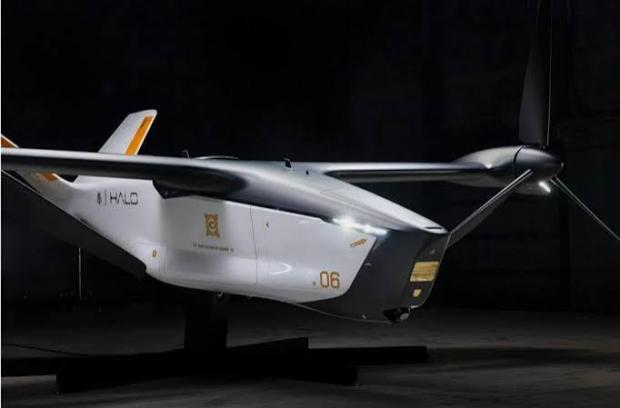
In aviation circles, the debate is often which came first: the military or civilian variant? Case in point: Archer Aviation's announcement at Farnborough of Halo, the civilian counterpart to the Thunder autonomous attack aircraft.
Unveiled as a Group 5 autonomous hybrid-powered tiltrotor, the Thunder was designed as a "Loyal Wingman" for combat helicopters. Now, Archer, working in close partnership with Anduril, has introduced the Halo, a commercial variant sharing the same core airframe and systems, sans the weaponry.
Like the Thunder, the Halo features a modular design, a top speed of 278 knots (320 mph / 515 km/h), a range of 800 nmi (920 miles / 1,481 km), and an operating ceiling above 18,000 ft (5,400 m). Its series hybrid-electric propulsion system uses a fuel-powered generator to supply electric motors, while dual optimum tiltrotors vary their RPM for enhanced efficiency and maneuverability.
So, which craft is the derivative of the other? The pair represents a classic example of dual-use technology, where the same core engineering serves two distinct markets.
Archer designed the airframe, battery architecture, hybrid-electric powertrain, and rotor dynamics, while scaling the system for mass production via commercial supply chains. Meanwhile, Anduril integrated the AI flight software, defense systems, and command-and-control infrastructure via its proprietary Lattice platform.
That means deciding which variant came first is ultimately a matter of perspective. While defense requirements were a primary focus, building the Thunder affordably at scale relied on commercial manufacturing foundations. Conversely, several key military design choices benefit civilian operators, such as its low-noise rotor system, runway independence, and ability to fit inside a standard shipping container for transport.
In commercial markets, the uncrewed Halo is targeted at offshore energy supply, heavy freight logistics, maritime operations, and emergency medical cargo transport. By removing human crew from hazardous environments, it offers a significant safety advantage for high-risk missions.
"Over the past eight years we've engineered, tested and scaled the technology this platform is built on," said Adam Goldstein, Founder and CEO of Archer. "The powertrain, the batteries, the motors, the manufacturing. We partnered with Anduril to take all of that knowledge and build something new: a clean-sheet aircraft in a completely different class of range, speed and payload. I believe this is the most sophisticated vertical lift aircraft platform ever developed-it's exactly what our customers need."