










Breaking News
 5 Pastured Pig Tips From Joel Salatin (Wrong Breed = Dead Pigs)
 The scale of U.S. losses in the Iran war is coming into focus as a Congressional Research Service...
 Erin Brockovich: 4,000 People Asked Me To Investigate Data Centers. Here's What I Found.
 Powering alot of different items at my home using the Ecoflow Delta 3 Max
Top Tech News
 Seven apps. One craft
 SHOCK CASE REPORT: Advanced Alzheimer's Patient Regains Speech, Memory, Mobility...
 Most artificial limbs rely on silicone or plastic to mimic human hands.
 Flying cell tower beams phone signal to Japan from 10 miles up
 Chinese Commercial Reactor Achieves Nuclear Fusion with Clean Hydrogen-Boron Fuel
 Med Beds Just Took a MASSIVE Step Forward, Healing People in Days!
 Palmer Luckey: Autonomous Weapons Are Ancient and Why Anduril Won't Build Humanoids | EP #295
 A laser just photographed objects through six feet of concrete
 Elon Musk's Next-Gen Motor Destroy Entire EV Industry
 China's disputed satellite refueling heralds new space war era



Self-Healing Contact Lenses Repair Scratches with Just 1 Hour of UV Light Exposure
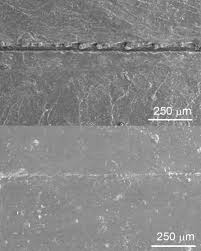
A scratched lens can mean an expensive replacement, but the UV light-activated hydrogel can repair these small imperfections in under an hour.
The technology also offers greater durability and an antibacterial coating to create a robust and resistant, superior contact lens.
Researchers Jung-Hyun Choi and Byung-Ki Cho used the already widely-employed hydrogel to create their new prototype contact lenses while redesigning the complex polymer structure. Through a process known as disulfide exchange, UV light at a wavelength of 365 nanometers causes sulfur bonds in the gel to temporarily break apart and reconnect with neighboring atoms.
Before and after photos released in a study presenting their invention show how these new connections equate to a repaired scar on the surface of the lens.
Choi and Cho explain that eventually, the lenses could be repaired at home as well—through UV light from devices used to cure nail polish, or indoor grow lamps for houseplants.
Atop the hydrogel structure, an additional layer of polymer was applied that resists bacterial buildup and abrasion, even after repeated contact with sandpaper. It retained moisture better than commercially-available contact lenses too, and the repaired scratches had a mere 2% perceptibility score, suggesting that multiple scratches could be repaired and tolerated before a replacement was needed due to transparency issues.
Additional testing for South Korean regulatory approval is needed, the authors explain, before the product can undergo market testing. The technology could reduce waste and lower replacement costs for millions of contact lens users.
The study, funded in part by the National Research Foundation of RoK, was published in ACS Applied Polymer Materials.